Tips
- Best time: October to March, morning
- Time needed: 1-1.5 hours

A compact Mughal-era garden tomb suited to history and architecture visits.
Safdarjung Tomb is a magnificent 18th-century Mughal garden tomb and one of the last examples of the grand Mughal architectural tradition. Built in 1754 for Nawab Safdarjung, the Prime Minister of the Mughal Emperor Ahmad Shah Bahadur, it is often described as the "sunset of the Mughal Empire."
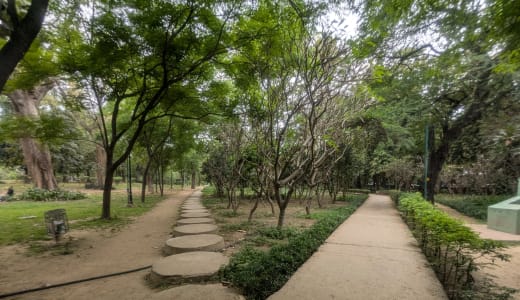
The tomb sits at the center of a large charbagh (four-quadrant garden) divided by water channels, surrounded by sandstone and marble pavilions. Its red sandstone facade and white marble dome make it a stunning and often overlooked gem in Delhi.
Safdarjung Tomb is often compared to Humayun's Tomb because of its similar charbagh garden layout, but it receives far fewer visitors — making it a peaceful and relaxed experience. The structure is slightly later and shows the declining grandeur of the Mughal period, but the craftsmanship is still impressive.
The complex includes several smaller pavilions known as Jangli Mahal, Moti Mahal (Pearl Palace), and Badshah Pasand (King's Choice), each with their own historical stories. The well-maintained gardens are popular for morning walks and photography.
Explore more
More places around Delhi