Overview
Qutub Minar is a famous historical monument of Delhi and is considered to be the highest brick minaret of India. Its construction was started by Qutubuddin Aibak in the 12th century. This minaret is one of the earliest examples of Islamic architecture in India.
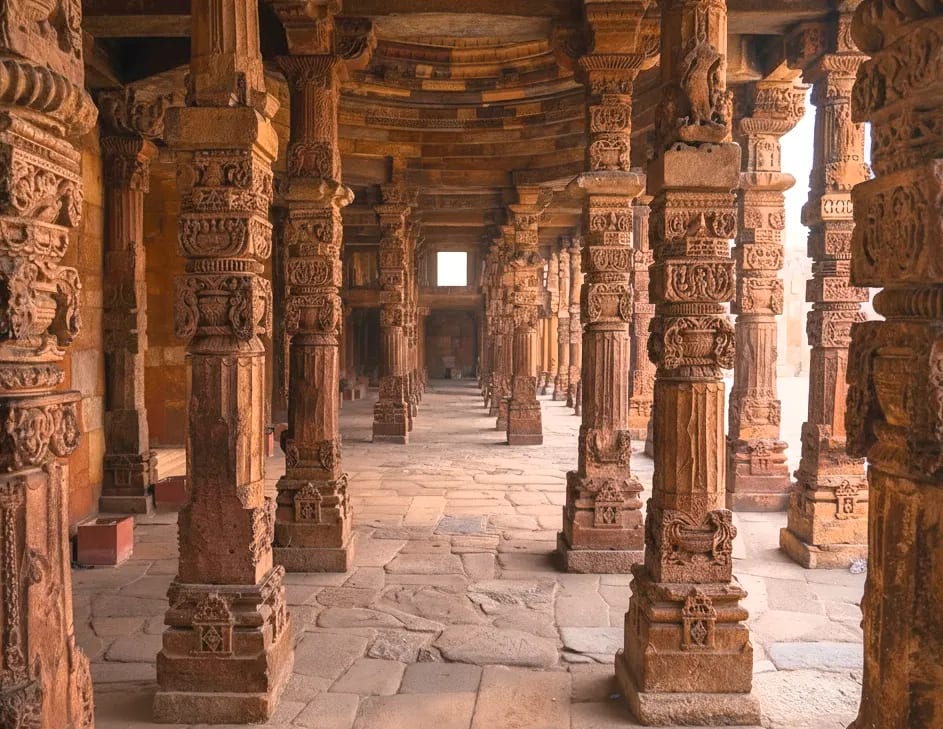
Qutub Minar is listed as a UNESCO World Heritage Site. The Qutub Complex also houses the Quwwat-ul-Islam Mosque, the famous Iron Pillar and many other historical relics.
The Qutub Minar is about 73 metres high and has five storys. Beautiful carvings and Qur'anic verses are inscribed on its walls, reflecting the exquisite craftsmanship of the time.
The Iron Pillar of the Qutub Complex still stands rust-free, which is a remarkable example of ancient Indian metallurgy. This place is highly attractive for lovers of history, architecture and photography.
Plan Qutub Minar as a visit to the wider monument complex rather than a single tower photograph. Decide how much time you want for the courtyards, architectural details and inscriptions, then leave room for the exit and return transport. A nearby temple or forest walk is a separate outing, with its own entry and walking arrangements.
- Right time to visit Qutub Minar: October to March - Best season Morning time is better to avoid crowd
- Build a manageable heritage route: Start with the features you most want to see and work back towards your exit. For a mixed-age group, agree on a shorter circuit and a meeting point instead of expecting everyone to cover the grounds at the same pace.
- Compare admission and tour costs: Separate the monument admission from optional guide, cab and package charges. Confirm which visitor category your ticket covers before payment; a tour listing does not establish the gate price.