Overview
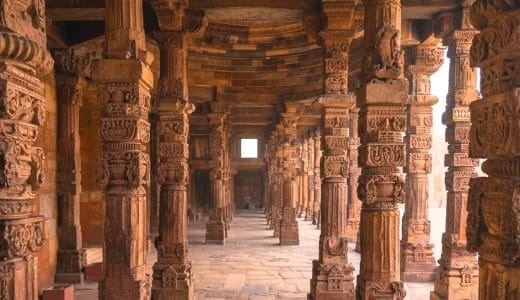
Mehrauli Archaeological Park is one of Delhi's most underrated historical treasures. Spread across about 200 acres adjacent to the Qutub Minar complex, this park contains over 100 historically significant monuments spanning nearly 1,000 years of Delhi's history.
From the Balban's Tomb — the earliest example of a true arch in India — to the stunning Jamali-Kamali mosque and tomb, the park is a living museum of Delhi Sultanate and Mughal-era architecture.
Unlike the well-maintained and ticketed Qutub Minar complex next door, Mehrauli Archaeological Park is a freely accessible sprawling heritage zone where you can wander among tombs, mosques, step-wells, and pavilions from multiple dynasties.
Balban's Tomb – The first true arch in Indian architecture (13th century)
Jamali-Kamali Mosque & Tomb – Stunning early Mughal architecture (16th century)
Metcalfe's Folly (Dilkusha) – A quirky colonial-era structure built inside a Mughal tomb
Rajon ki Baoli – A beautifully preserved 16th-century step-well
Gandak ki Baoli – Another ancient step-well with historical significance
Adham Khan's Tomb – Octagonal Mughal tomb at the edge of the park
- Tips for Visiting: Wear comfortable walking shoes – Paths can be uneven and long Carry water – No food stalls inside the park Visit in the morning – Cooler temperatures and fewer visitors Consider a guide – Many monuments lack signage; local guides add great context Ideal for photography – Especially Jamali-Kamali and Rajon ki Baoli
- Best time: October to March, early morning
- Time needed: 2-3 hours