 7 days · 6 nights
Glimpse of Bhutan
Check current priceon Thrillophilia
Plan Thimphu's Buddhist landmarks, textile galleries and markets across two sightseeing days, with practical advice on guides, Paro transfers, admission uncertainty and an optional Dochula excursion.

Thimphu brings together Buddhist landmarks, textile galleries, markets and hillside sightseeing. For a first visit, start with Memorial Chorten, the Royal Textile Academy, Tashichho Dzong and Buddha Dordenma, then choose additional stops around your interests and walking comfort.
Allow two full sightseeing days as a planning estimate, with arrival and departure time counted separately. That gives you room for religious sites and museums without turning every stop into a deadline. Add a third day for Dochula only if it fits the weather, road conditions and the rest of your Bhutan journey.
Group your choices before arranging a vehicle. Memorial Chorten, textile galleries and market visits form the city-focused part of a stay. Buddha Point and Motithang need separate transport planning. Dochula is an excursion outside Thimphu on the road towards Punakha; give it space beyond the two-day city circuit.
Three terms help when reading sightseeing descriptions: a dzong is a fortress-monastery, a lhakhang is a temple, and a chorten is a Buddhist stupa. Religious buildings remain places of worship, and visitor access may cover only certain areas.
Indian citizens enter as tourists using an entry permit. Eligible Indian document alternatives exist, including voter identification for adults and specified documents for children; check document eligibility and guardian requirements separately before booking. Ordinary US and European-country passport holders need advance visa approval. Special diplomatic or official passport provisions must be checked separately. Nationality and passport category determine the rules. See the Department of Tourism entry guidance.
Where a passport is used, Bhutan's Immigration Rules require at least six months of validity beyond the intended departure date. Rule 113 exempts tourist visa or permit holders from the general route-permit requirement; restrictions on particular areas and other access conditions still apply. The governing source is the Immigration Rules and Regulations 2023.
Current Tourism guidance requires a guide, including for monument and dzong visits. Arrange one when planning your sightseeing; there is no general Thimphu exemption in that guidance. The detailed Bhutan entry requirements guide covers documents, permits and qualifications.
Book accommodation certified by the Department of Tourism or specifically approved under its rules. You can make bookings independently, but tour and sightseeing services must be provided through a Department-registered tour operator. Confirm the responsible operator, licensed guide and approved lodging before paying.
As of 21 October 2026, the adult Sustainable Development Fee, or SDF, is INR/Nu.1,200 per night for Indian nationals and US$100 per night for ordinary US and European-country tourists paying the dollar rate. Nu. denotes Bhutanese ngultrum. The dollar incentive is scheduled through 31 August 2027; recheck before payment. The official incentive announcement gives the applicable dates.
Budget separately for accommodation, meals, guiding, vehicles and attraction tickets. Use the Bhutan SDF and travel costs guide for child rates and budget categories. Both linked Traviya guides are local editorial drafts; public availability has not been confirmed. A border-town SDF waiver does not extend to a visit to Thimphu.
Spring, broadly March to May, and autumn, broadly September to November, are reasonable starting points for sightseeing plans. Monsoon rain needs additional road flexibility, while winter calls for warm clothing and attention to conditions on higher excursions. Bhutan's official seasonal guidance explains the variation across the country.
Choose dates around the activities you value, then check the forecast closer to departure. Mountain visibility is conditional in every season. If a festival is central to your trip, verify its exact current dates and visitor arrangements before committing to flights and hotels.
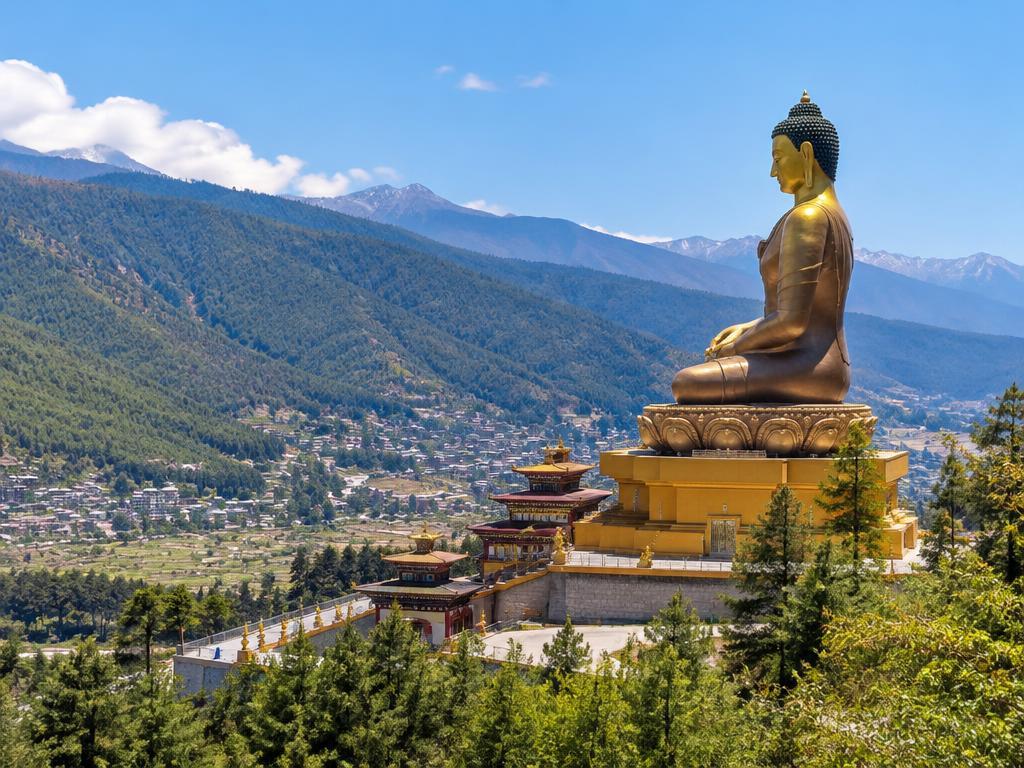
Buddha Dordenma is the large Buddha landmark at Kuenselphodrang, also called Buddha Point. Choose it for a hillside stop with a different setting from the town circuit. The Thimphu district administration identifies the location.
Arrange a vehicle and ask about the current drop-off point, steps and permitted interior access. Keep the visit flexible for weather, and confirm admission charges before setting your budget.
Memorial Chorten offers a city stop centred on a living place of Buddhist devotion. Leave space for worshippers and ask your guide to explain what you are observing.
Combine it with a museum or textile visit. If steps or prolonged standing would be difficult, ask your guide to check the approach and plan suitable breaks.
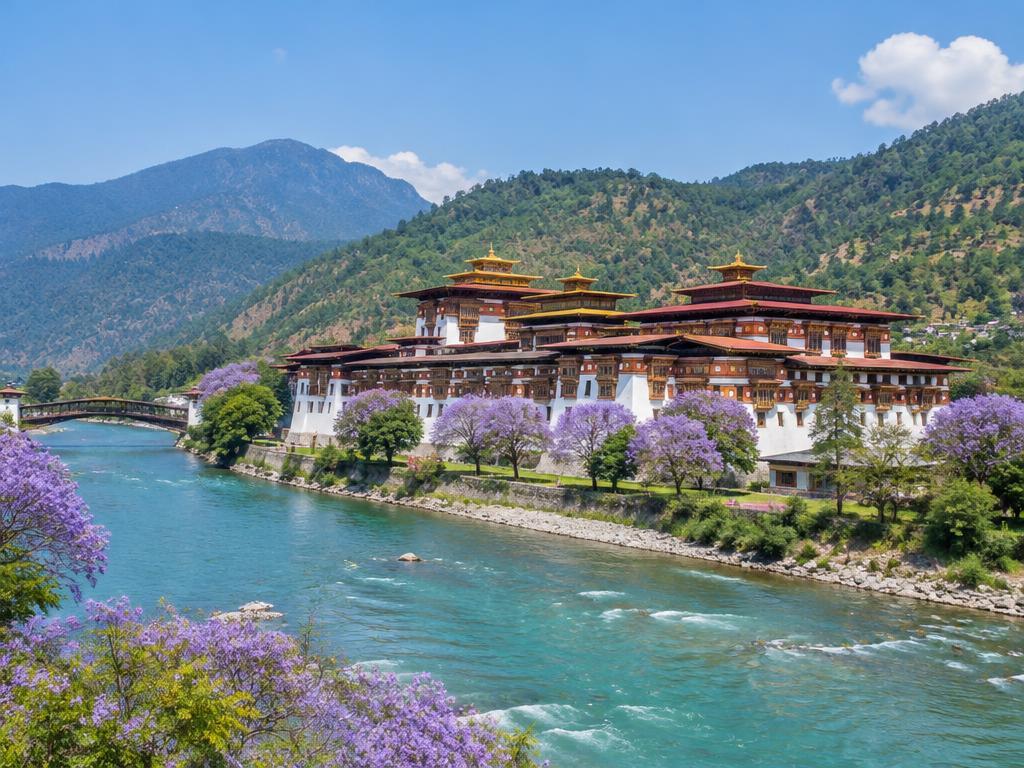
Tashichho Dzong combines religious and government functions. It suits visitors interested in architecture and the relationship between civic and monastic life.
Its working functions make visitor access an important part of planning. Ask your guide which areas are open on your date, and keep another city stop available if entry arrangements change.
The Royal Textile Academy is a useful choice for understanding Bhutanese weaving before considering a purchase. Its Textile Museum includes permanent and temporary galleries, while the institution also undertakes conservation work. Its museum description explains these functions.
Check which galleries will be open for your visit. Demonstrations or other separately arranged activities need direct confirmation. The academy's programmes page also describes textiles sold through its museum shop. Before buying, ask about fibre, technique, origin and care.
Ka Ja Throm brings farm produce, local food and handicrafts into the sightseeing mix. It offers a change from galleries and religious monuments: use the stop to browse, look at everyday ingredients or choose something to eat according to what is operating that day.
Keep this part of the day flexible rather than building a visit around a particular vendor or product. It fits well between more formally arranged city stops.
The Folk Heritage Museum interprets rural household life through a traditional house built with earth and timber. Choose it if you would like to connect the capital's cultural sights with domestic life and building traditions.
Motithang Takin Preserve offers a different focus: the takin, Bhutan's national animal. Select the museum or preserve according to your interests, leaving the other for a longer stay. Check the walking approach and current access before deciding; neither choice should be assumed to provide step-free entry.
These descriptions draw in part on VisitBhutan's Thimphu overview, a commercial destination source. Confirm current opening hours, admission and permitted interiors for each stop with your guide; published descriptions do not establish current access.
Use an authorised land-entry point with the documents, permissions and guide arrangements applicable to your nationality and route. Allow time for border processing before the onward journey to Thimphu, and confirm current road conditions and your transfer plan before travel.
Arrange a taxi or a vehicle with a driver for dispersed sights, together with the required guide. Use short walks where the route suits your needs, and confirm pickup points, waiting arrangements and charges in advance.
Fly to Paro Airport and continue to Thimphu by road using an arranged transfer or airport taxi. The airport authority gives approximately 54 km by road; journey time depends on conditions and your exact destination. Flights depend on daylight and suitable visual conditions, so protect arrival and departure buffers.
The Paro airport authority supplies the distance and flight operating conditions. The Tourism transport guidance describes airport taxis and hired vehicles with drivers.
The guide-engagement notification dated 11 September 2026 applies to the Phuentsholing land entry and exit port. It changes pre-arranged guide registration to 48 hours before travel and opens the walk-in registration link at 6 p.m. for next-day engagement. These arrangements concern guide registration. Confirm tourist permit procedures, terminal hours and guide availability separately.
Confirm the practical arrangements before travelling to the border. The official announcements page links the notice. Check the procedures applicable to your chosen port if entering elsewhere.
A few menu terms make ordering easier:
The Department of Tourism food guide introduces local dishes and Thimphu's dining choices. Confirm dairy, meat, stock and allergy ingredients directly with the kitchen before ordering.
For textile shopping, begin with the galleries if they interest you, then compare pieces with a clearer understanding of their construction. Ask sellers to explain how an item was made and request a receipt for significant purchases. Confirm demonstrations and particular products in advance if they are a priority.
The package listing is a Bhutan country selection. Confirm that any proposed route includes Thimphu, how many sightseeing days it allows, and whether guides, vehicles, SDF and attraction tickets are included.
Current provider prices, ratings and availability have not been independently confirmed; check prices, availability and terms before booking. General Bhutan photographs used as fallbacks are illustrative. Check the itinerary and inclusions for the package you are considering.
Explore itineraries featuring Bhutan. Some cover multiple destinations; confirm the route, dates and inclusions with Thrillophilia. Some images illustrate the destination rather than a specific tour.
Use this as a flexible plan for two full sightseeing days, with arrival and departure counted separately. Confirm opening days, guide arrangements and individual access needs before fixing the order.
Day 1
Day 2
Day 3 (optional)
Protect arrival and departure buffers: Paro flights depend on daylight and suitable visual conditions, while land entry needs processing time. Reorder sights when opening arrangements change. Confirm steps, surfaces, toilets and vehicle access individually; this itinerary does not establish step-free access or guaranteed admission.
Keep attraction admission separate from SDF and from guide or transport charges. Ask for an itemised quote showing which tickets are included and which are payable locally.
The official monument notice effective 15 March 2023 lists Nu.500 for Memorial Chorten, Changangkha and Tashichho Dzong. Confirm current charges before relying on these dated amounts.
There is an unresolved fee conflict for Buddha Dordenma and Simtokha Dzong: the 2023 official notice lists no admission fee, while a commercial fee guide dated January 2026 lists charges. Current official evidence has not resolved the difference. Confirm the applicable charge with the site or your guide before visiting, and allow room in your budget for admission.
BEFORE YOU GO
Find helpful answers and plan your next journey with confidence.
Allow two full sightseeing days as a planning estimate, with arrival and departure counted separately. Add an optional third day for Dochula or a slower city visit, depending on weather, access and your wider route.
Start with Memorial Chorten, the Royal Textile Academy, Tashichho Dzong and Buddha Dordenma. Add a market visit, then choose the Folk Heritage Museum or Motithang Takin Preserve according to your interests and confirmed access.
Spring and autumn are reasonable sightseeing planning windows. Allow flexibility for monsoon rain or winter cold, and check conditions before higher excursions. Clear mountain views are never guaranteed.
Continue by road using an arranged transfer or airport taxi. The airport authority gives approximately 54 km to Thimphu; journey time varies. Keep buffers because flights depend on daylight and suitable visual conditions.
Current Department of Tourism guidance requires a guide, including for monument and dzong visits. Arrange one in advance and confirm your sightseeing plan; do not assume a general Thimphu exemption.
No. Budget separately for attraction admission, guiding, vehicles, accommodation and meals. Check package inclusions and confirm current site charges, especially where older official information conflicts with newer commercial listings.
Plan vehicle-assisted visits and select short stops after checking their approaches. Ask about steps, surfaces, seating, toilets and drop-off points at each site. Confirm step-free entry and suitable interiors individually where needed.
Add Dochula if weather, road access and your onward route support it. Otherwise, use the extra time for museums, textiles or a slower city day. Keep the excursion separate from your two-day city plan.
Information is dated 21 October 2026. The official Thimphu and Paro travel booklet was unavailable for inspection and has not been used as a source. Current admission charges and site access remain subject to confirmation, including the fee conflict explained above.
Choose the sights that interest you, confirm entry and practical arrangements before payment and departure, and leave enough space to change the order when conditions require it.