 7 days · 6 nights
Glimpse of Bhutan
Check current priceon Thrillophilia
Plan Punakha around its riverside dzong, temple traditions and valley walks, with practical choices for two to three days, access limitations and onward travel.
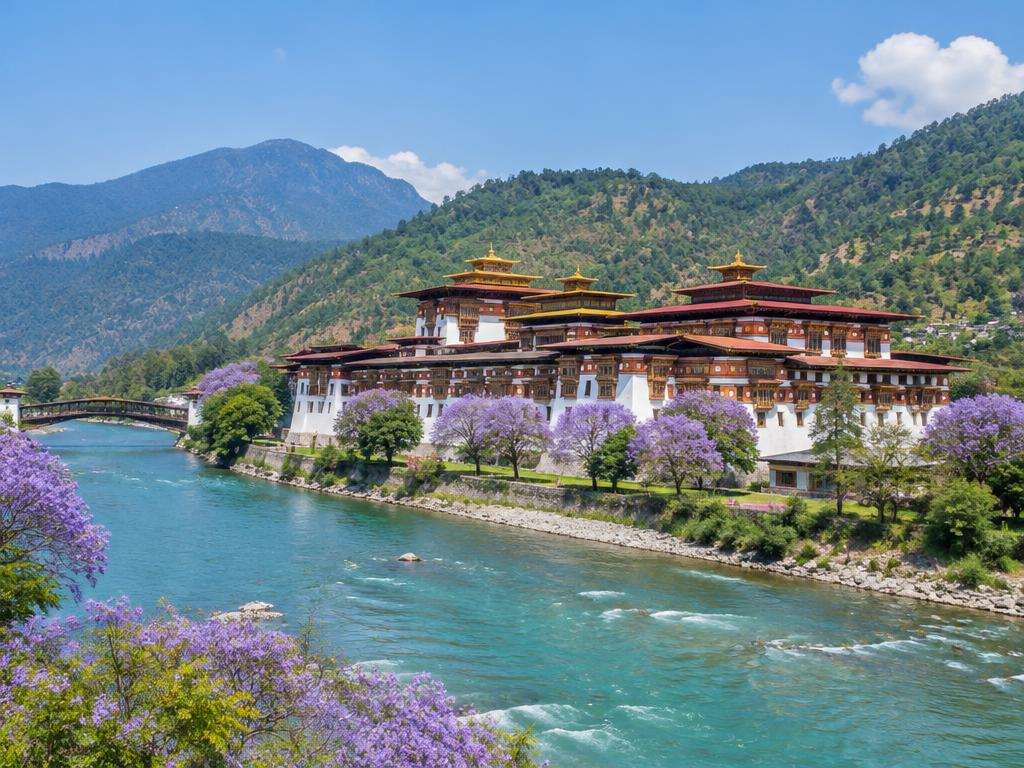
Punakha Dzong, the separate Pho Chhu suspension bridge, Chimi Lhakhang and Khamsum Yulley Namgyal Chorten make a rewarding first visit to Punakha. Together they offer river scenery, living Buddhist traditions and walks through the valley, with enough variety to choose outings around your interests and walking comfort.
Allow two to three calendar days as a flexible starting point, remembering that arrival and departure can take substantial parts of those days. Two days suit a selective visit; a third gives you more room for Khamsum or slower sightseeing. This guide explains the main choices, access limitations, arrival planning and costs to check before booking.
A few local terms help: a dzong is a fortress complex with religious and administrative functions, a lhakhang is a temple, and a chorten is a Buddhist stupa or shrine. These are places of worship as well as visitor attractions.
Indian nationals need a permit. Tourists travelling on ordinary US or European-country passports need visa approval before travel; nationality and passport category matter, rather than where you live. Consult Bhutan’s official visa and permit guidance and the companion Bhutan entry requirements guide for document and application planning. Confirm current document-validity requirements and application timing with Immigration before paying for non-refundable travel.
Arrange a certified guide with a valid licence for Punakha sightseeing and inter-district transfers from Paro airport. The Department of Tourism’s 8 April 2026 guide notification explicitly covers monument visits and airport travel to other districts. Its first-designated-checkpoint exception does not provide a general exemption for sightseeing in Punakha.
You can make bookings independently, while tour and sightseeing services must be provided through a tour operator registered with the Department of Tourism. Confirm which operator is responsible for those services, who arranges your guide and transport, and whether your accommodation is certified or otherwise approved. The Tourism Rules and Regulations 2024, including rules 28–29 on tour provision, set out these obligations.
Budget separately for the nightly Sustainable Development Fee, accommodation, guiding, transport, meals and monument admissions. A border-town-only SDF waiver does not cover a stay in Punakha. Use the companion Bhutan SDF and travel costs guide for country-wide budgeting; local admission qualifications appear below.
Travel information is dated 22 October 2026. Reconfirm requirements and bookings for your travel dates.
Spring and autumn are useful starting points for sightseeing plans. March to May offers spring conditions, although showers become more likely as the season progresses. September to November covers autumn, with the transition away from summer rain generally making later autumn an attractive option.
Winter, from December to February, calls for layers, particularly for mornings, evenings and higher-road transfers. Summer brings greener landscapes alongside rain and the possibility of disrupted journeys. Leave spare time for road travel and adjust walks after heavy rain. These are seasonal patterns, not a forecast or assurance of clear mountain views. See Bhutan’s official seasonal guidance.
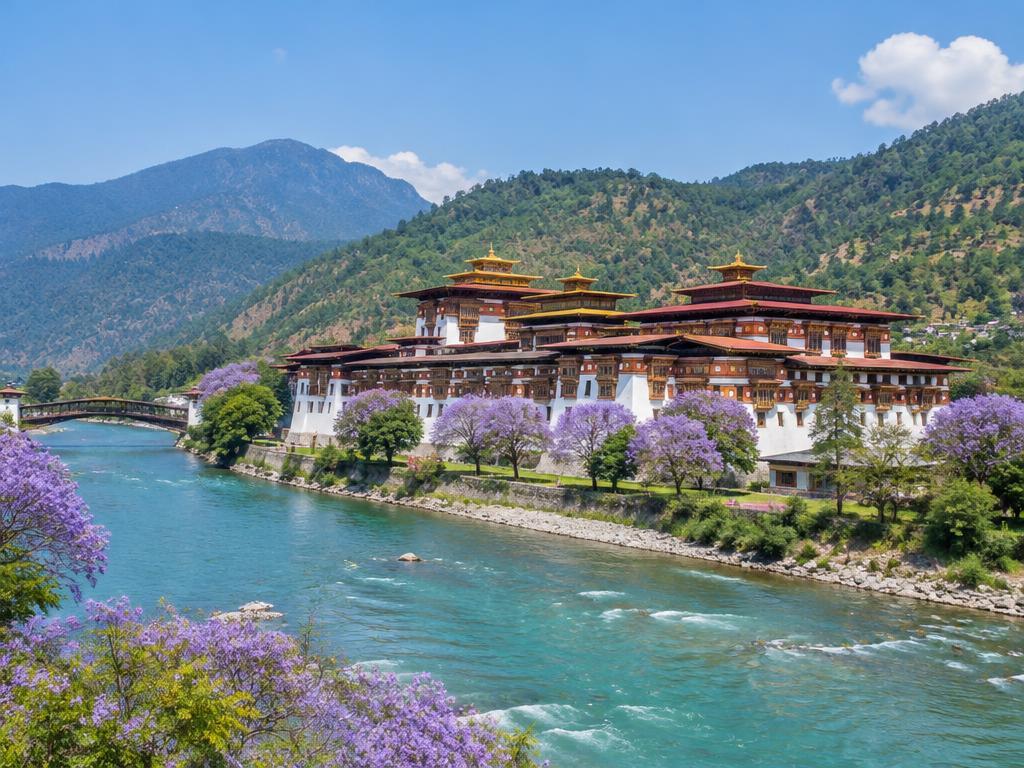
Begin with Punakha Dzong for its riverside setting, courtyards, Buddhist art and working religious and administrative spaces. The complex stands where the Pho Chhu and Mo Chhu rivers meet. Follow your guide’s explanation of the buildings and murals, leaving time to appreciate the setting. Bhutan’s official cultural itinerary provides background on the site.
Allow roughly one to one and a half hours as a planning estimate, with more time if you prefer frequent pauses. The visitor route described by a local operator includes steep entrance stairs and courtyards on different levels. Ask about current access before booking if stairs are difficult. An exterior visit can be a gentler alternative, but confirm the approach and viewing location rather than assuming it is step-free.
The pedestrian suspension bridge over the Pho Chhu is separate from the covered bridge used to approach the dzong. Prayer flags line the crossing, which offers views along the river and across the valley. The official cultural itinerary describes its connection with surrounding settlements, while Bhutan’s destination overview distinguishes the two bridges.
Consider it before or after the dzong, depending on conditions and your comfort with heights. Ask your guide about the current approach and surface, and leave out the crossing if anyone in your group would find it uncomfortable.
Chimi Lhakhang, near Lobesa, is associated with the Buddhist teacher Drukpa Kunley and traditions of fertility blessings. The Department of Tourism’s cultural itinerary describes pilgrims seeking blessings and families bringing children to be named. Approach its religious imagery and practices with respectful curiosity; fertility blessings are religious traditions, with no medical outcome implied.
A field-and-village walking approach adds interest to the visit, but includes uneven ground and a final climb. One operator’s route description estimates about 20 minutes on foot each way and around one and a half hours overall. Treat these as approximate allowances. Ask about the closest currently permitted vehicle access and path conditions; do not assume every visitor must use the same approach. After rain, shorten or replace the walk if footing is poor.
Choose Khamsum when you want a more substantial walking outing. Its approach crosses a bridge, passes terraced rice fields and climbs towards the chorten above the valley. Inside, sculptures add a different focus to the visit, but reaching higher levels involves steep stairs. Bhutan’s official visitor feature gives roughly an hour or less for the ascent. Allow additional time for driving, the visit, breaks and the return walk.
Consider the climb and interior stairs separately: being comfortable on a walking trail does not necessarily mean the stairs will suit you. Ask your guide about current conditions and which areas are open. If the outing feels too demanding, substitute a shorter, locally checked valley walk or a relaxed drive with suitable stopping places.
A short guide-arranged village or field walk can make space for everyday landscapes between monument visits. Agree on the route, surface and turnaround point first, keep to permitted paths and avoid entering working fields without permission.
Rafting is offered on the Mo Chhu and Pho Chhu, but keep it optional. Ask the operator to assess current conditions and participant suitability, including age requirements and equipment. Bhutan’s official activity overview introduces rafting; confirm operations and arrangements directly before allocating time or paying.
The Thimphu–Dochula–Punakha route is a practical approach. Bhutan’s official destination feature publishes about two and a half hours from Thimphu as a driving estimate. Allow additional time for Dochula stops, weather and road delays.
Arrange a vehicle with a driver for the dispersed sights and agree on walking approaches with your guide. Local self-drive vehicle rental is unavailable according to Bhutan’s official visitor guidance. Confirm pickup points, waiting time and the return journey when arranging an outing.
Fly into Paro and continue to Punakha by road. Check current flight connections and arrange the onward vehicle, driver and licensed guide before arrival. Bhutan’s official transport guidance explains the air gateway and in-country travel options.
If entering through Phuentsholing, settle guide arrangements before committing to a tightly timed onward journey. A Department of Tourism notification issued on 11 September 2026, listed on its announcements page on 14 September, publishes two changes: pre-arranged guides register 48 hours before the tourists’ travel date, and the walk-in registration link opens at 18:00 for the following day’s engagement. See the Phuentsholing guide-engagement notification, linked from the official announcements page.
These arrangements concern guide registration at Phuentsholing. They do not establish immigration approval, border opening hours or guaranteed guide availability. The notice gives no separate commencement date and refers to a separate detailed guideline. Confirm the current procedure with your responsible provider; the notice alone does not explain the full process or arrangements at other land ports.
Ask about Bhutanese dishes such as ema datsi, a chilli-and-cheese preparation served with rice, and momo, or dumplings. Discuss chilli levels and dietary requirements before ordering rather than assuming a familiar dish name means a familiar preparation.
For Punakha-specific culinary context, the Department of Tourism highlights Nobgang’s ema lumtsho, or fried chillies; jatsa gondo, a sieved-egg preparation; maekhu, a puffed-rice snack; and aezey nyergum, a chilli paste. Its food and drink guide describes these traditions. Ask your host what can be prepared during your stay, as these dishes may not appear on local menus.
Shops around Chimi offer souvenirs connected with the area’s religious imagery. Ask your guide to explain their context and choose items respectfully. Check where an item was made and what materials it uses before assuming that a locally sold souvenir is Bhutan-made. Bhutan Broadcasting Service reporting describes craft sales and sourcing challenges in the area.
Use the Bhutan country catalogue as a starting point for comparing a wider trip. These listings cover Bhutan rather than Punakha alone. Confirm that a proposed route includes Punakha and allows enough time for your chosen sights.
Ask for written confirmation of travel dates, accommodation, guide and vehicle arrangements, admissions, SDF treatment and cancellation terms. A displayed listing does not establish current availability or the final payable price. Any fallback destination photographs are illustrative and do not identify the accommodation or activities included.
Explore itineraries featuring Bhutan. Some cover multiple destinations; confirm the route, dates and inclusions with Thrillophilia. Some images illustrate the destination rather than a specific tour.
This flexible plan uses an arrival day, a main sightseeing day and an optional third day. It is a planning recommendation, not a fixed timetable; adjust it for your transfer, walking comfort, weather and confirmed site access.
Day 1
Day 2
Day 3 (optional)
For a two-day visit, choose fewer stops and reserve time for departure; do not compress this entire plan into two days. A long arrival transfer may leave little sightseeing time. Rafting needs its own allowance, and flight connections require additional journey planning and a weather buffer.
The Department of Tourism’s monument admission schedule effective from 15 March 2023 lists Nu.500 each for Punakha Dzong and Chimi Lhakhang. Nu. denotes Bhutanese ngultrum. Reconfirm the current charge before visiting and ask whether your booking includes it; admission is separate from the nightly SDF.
Child concessions are published, but the schedule and tourism FAQ differ at the exact age-18 boundary. Request confirmation for an 18-year-old instead of assuming a discount. Confirm any applicable Khamsum charge separately. Exact current monument hours and closures also need local confirmation, so avoid building your day around an unconfirmed opening time.
BEFORE YOU GO
Find helpful answers and plan your next journey with confidence.
Allow two to three calendar days as a flexible starting point. Arrival and departure reduce sightseeing time, so two days call for a selective route. A third day gives more room for Khamsum or a slower alternative.
Start with Punakha Dzong, then consider the separate Pho Chhu suspension bridge and Chimi Lhakhang. Add Khamsum Yulley Namgyal Chorten if you want an uphill walk and are comfortable with steep interior stairs.
A selective day trip is possible, but driving takes a substantial part of the day. The published estimate from Thimphu to Punakha is about two and a half hours, before sightseeing stops or delays. Allow separately for the return journey, choose a small number of sights and confirm both journeys with your guide.
Spring and autumn are useful sightseeing windows. Summer rain calls for more flexibility on roads and walking paths, while winter requires layers, particularly for mornings, evenings and higher-road transfers. Seasonal patterns do not guarantee clear views or road access.
Yes. Arrange a certified guide with a valid licence for Punakha tours, monument visits and inter-district airport transfers. Making your own bookings does not remove guide or licensed-service obligations.
The official schedule effective from 15 March 2023 lists Nu.500 each. Reconfirm current rates and booking inclusions; these admissions are separate from SDF. The admission concession for someone aged exactly 18 needs confirmation because official wording differs.
The route includes a bridge crossing and an uphill approach, followed by steep interior stairs. The official ascent estimate is roughly an hour or less, excluding driving, the visit, breaks and descent. Check conditions and choose a gentler alternative if needed.
Ask about the dzong’s entrance stairs and changes of level, Chimi’s uneven walking approach and closest current vehicle access, and Khamsum’s climb and interior stairs. Request specific current information and suitable alternatives; none should be assumed step-free.
Choose Punakha for the combination that appeals to you: a carefully paced dzong visit, temple traditions, river scenery or a longer walk. Build the journey around those priorities, then leave enough room for transfers, rests and changing conditions.