Best Places to Visit in Jaipur

Jaipur is located between the Aravalli Hills. It is about 268 km from Delhi. It is known as the Pink City. Beautiful forts and temples, including the City Palace, are still used as the royal residence of Jaipur. Amber Fort has a beautiful Sheesh Mahal, a huge rain tank, a cannon factory, and other ancient monuments. Jaipur has a rich history that is evident even today. Hawa Mahal was built for queens and princesses, and Jaigarh was used for military activity. Jantar Mantar showcases advanced astronomical technology. There are many places; let’s list them all.

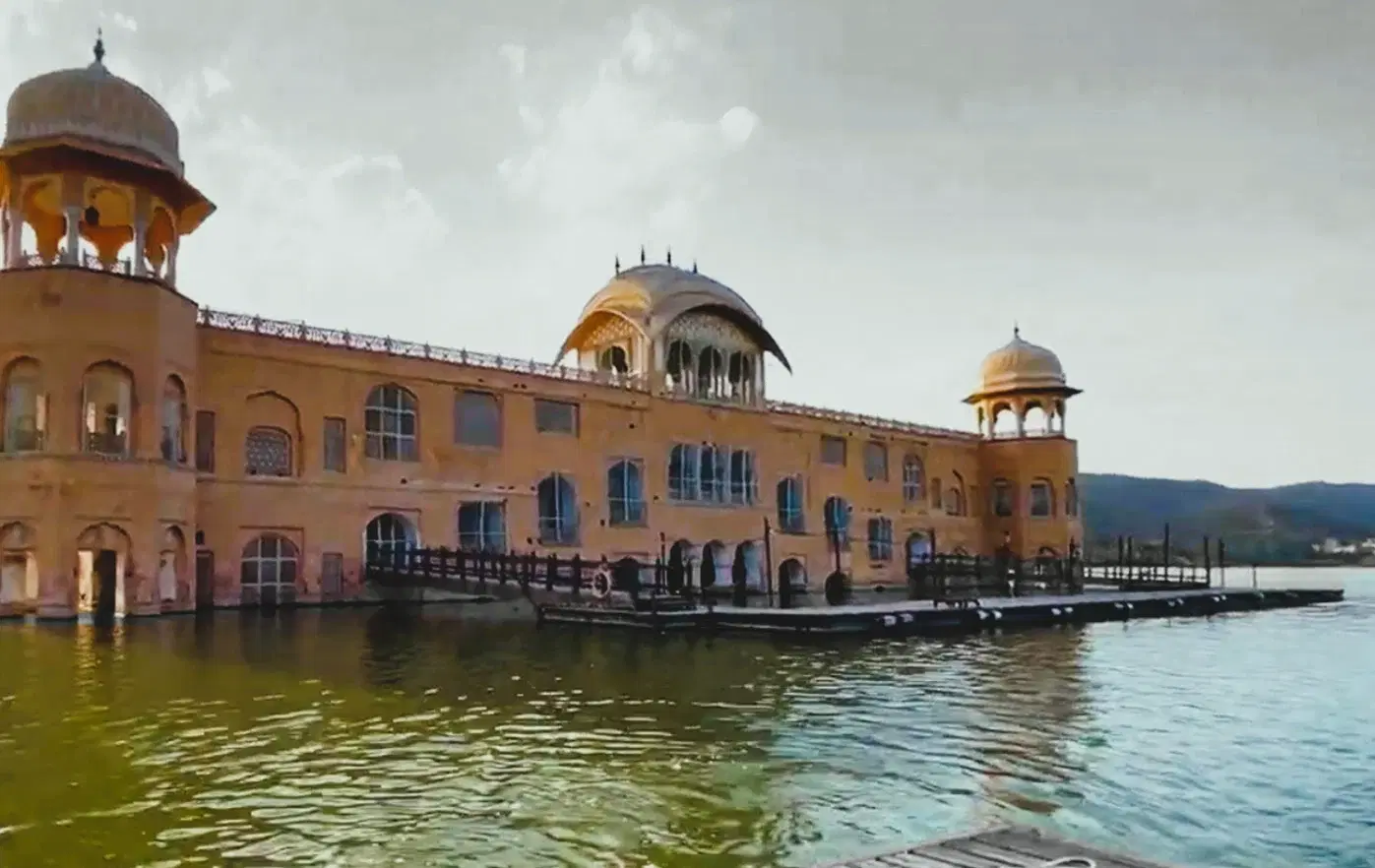
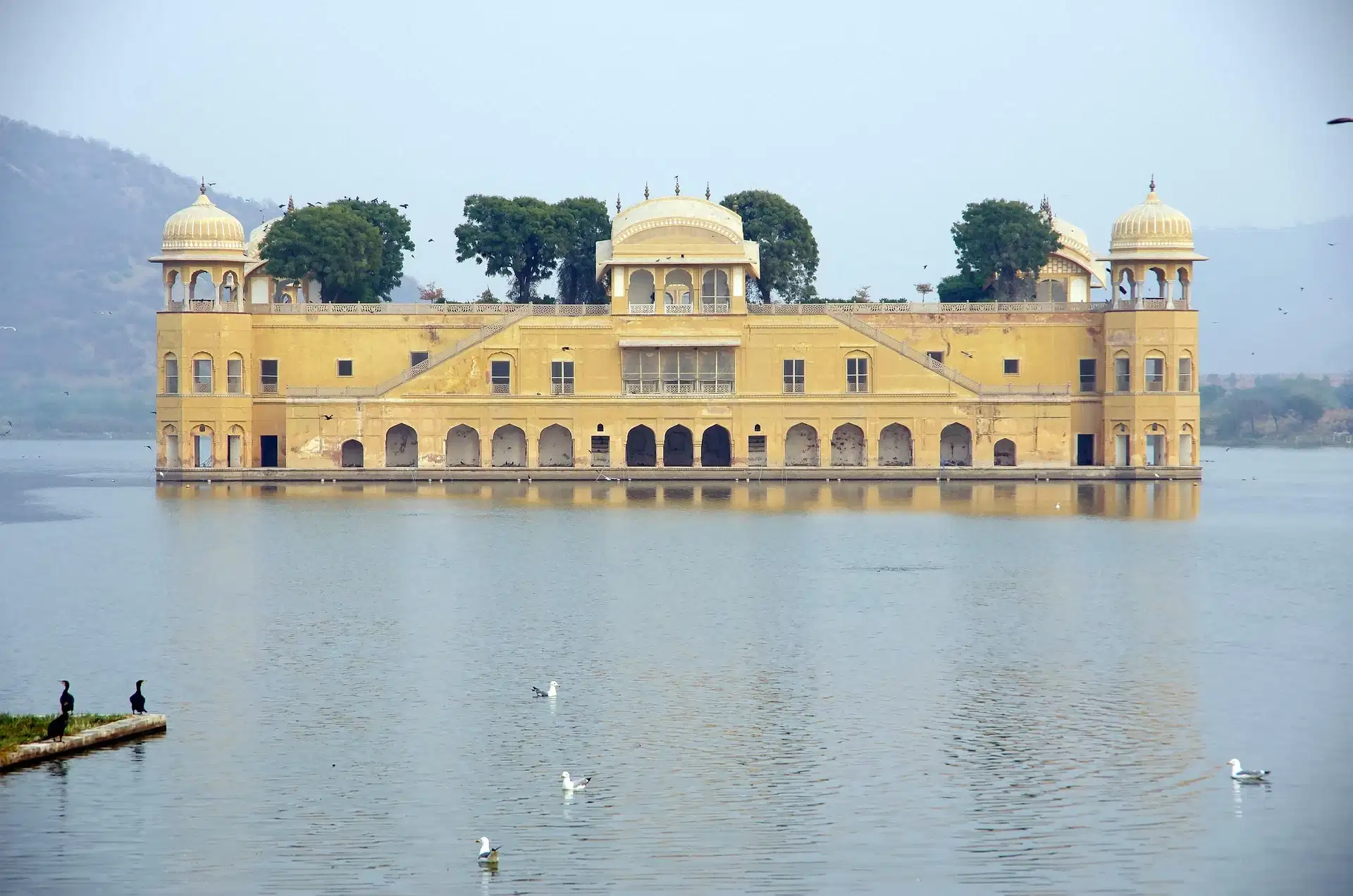
Jal Mahal Water Palace floating on Man Sagar Lake, Jaipur, Rajasthan
1 / 2

Need a cab or hotel in Jaipur?

Quick Highlights

Altitude
431 meters
Distance from Delhi
268 km
Nearest airport
Jaipur International Airport.
Nearest railway station
Jaipur Junction Railway Station.

Top Tourist Places

1.Amber Fort

Amber Fort, or Amber Fort, is located in the Aravalli Hills, about 10 km from Jaipur, Rajasthan. Raja Man Singh built it, and later, it was expanded by other rulers. The majestic Amer Fort houses the stunning Sheesh Mahal, or Palace of Mirrors, renowned for its intricate mirror work and regal charm. The main attractions of the fort are Diwan-e-Aam, Diwan-e-Khas, Sheesh Mahal, and Sukh Niwas. The Sheesh Mahal, the fort's main attraction, It is grand and beautiful. Sukh Niwas was artificially cooled by a unique air-and-water system. The technology of that time was used in the bathhouse, where copper rods heated by a wood furnace would warm water for bathing. The walls of the fort are adorned with ancient frescoes made using vegetable dyes. A 2 km-long and secret underground tunnel connects Amber. Soldiers used this tunnel for safe passage during the war.

Main Attractions

  • Explore the grand palace complex and Sheesh Mahal (Mirror Palace).
  • Enjoy an elephant ride or jeep ride up to the fort entrance.
  • Watch the light and sound show in the evening.
Amber Fort's inner courtyard with ornate Ganesh Pol gateway, colonnaded arches, and tourists on the marble floor, Jaipur

Nearest Attractions

  • Jaigarh Fort – ~2 km
  • Panna Meena Ka Kund – ~0.5 km
  • Nahargarh Fort – ~15 km

Visitor Information

Modest dress recommended when visiting temples inside the fort

2.Jaigarh Fort

Amer Fort, perched atop Cheel ka Tila (Eagle’s Hill), was built by Sawai Jai Singh II and offers panoramic views of the surrounding landscape. It is part of the Aravalli range. It is 10 km away from Jaipur. It was built for military training and is connected to Amber Fort by a 2 km-long secret tunnel. The fort features a puppet theatre, ancient utensils, drums, water coolers, and howdahs for elephants, some of which are nearly 400 years old. The fort also housed a cannon factory, where the largest cannon of its time, Jaivana, was built. A historical cannon shell strike once created a visible crater, marking a significant event in the fort’s past. Later, it became the Golimar pound. The fort is famous for its views and, although relatively simple, is worth visiting in cold weather.

Main Attractions

  • See the world's largest cannon on wheels – Jaivana.
  • Explore the underground water tanks and royal armory.
  • Enjoy panoramic views of Amber Fort and Aravalli Hills.
Stone pavilion with colonnaded arched veranda inside Jaigarh Fort, Jaipur

Nearest Attractions

  • Amber Fort – ~2 km
  • Nahargarh Fort – ~8 km
  • Panna Meena Ka Kund – ~2.5 km

Visitor Information

Comfortable walking shoes recommended for uneven fort terrain

3.Jantar Mantar

Maharaja Jai ​​Singh II made this in the 18th century. It is located near the City Palace and Hawa Mahal; Jantar Mantar is an astronomical observatory. There are five Jantar Munters all over India. Delhi, Jaipur, Ujjain, Mathura, and Varanasi. The word "Yantra" means instrument, and "Mantra" (from mantrana) means formula or calculation. Various Instruments here, such as Emperor Yantra, Jai Prakash Yantra, and Chakra Yantra, Predict Time and Planetary. It is a UNESCO World Heritage Site. If you are interested in astronomy, science, architecture, or history, it can be the best place for you.

Main Attractions

  • Explore 19 astronomical instruments, including the world's largest stone sundial.
  • Learn about ancient astronomical calculations and timekeeping.
  • Photography of the unique geometric structures.
Samrat Yantra — the world's largest stone sundial at Jantar Mantar UNESCO World Heritage Site, Jaipur

Nearest Attractions

  • City Palace – ~0.3 km
  • Hawa Mahal – ~0.5 km
  • Govind Dev Ji Mandir – ~0.8 km

Visitor Information

Casual comfortable clothing; sun hat recommended

4.City Palace

City Palace is situated within walking distance from Jantar Mantar, Hawa Mahal, and the Pink City. It is still the royal residence of Jaipur. Each entry gate has a unique design, and certain areas, such as Shobha Niwas (Gold Palace) and Blue Room, are accessible only through special packages. The royal tour is not included in the normal package. The Blue Room’s intricate paintings and blue walls take you away to another world. The palace’s Sheesh Mahal, illuminated by candles or diyas at night, is a sight to behold.

Main Attractions

  • Visit the Mubarak Mahal and Chandra Mahal within the complex.
  • Explore the royal museum showcasing weapons, costumes, and artifacts.
  • See the world's largest silver vessels in the Diwan-e-Khas.
Ornate gateway of City Palace — the living royal residence in the heart of Jaipur's Pink City

Nearest Attractions

  • Jantar Mantar – ~0.3 km
  • Hawa Mahal – ~0.6 km
  • Govind Dev Ji Mandir – ~0.5 km

Visitor Information

Modest dress recommended; respectful attire for the royal complex

5.Hawa Mahal/Palace of Winds

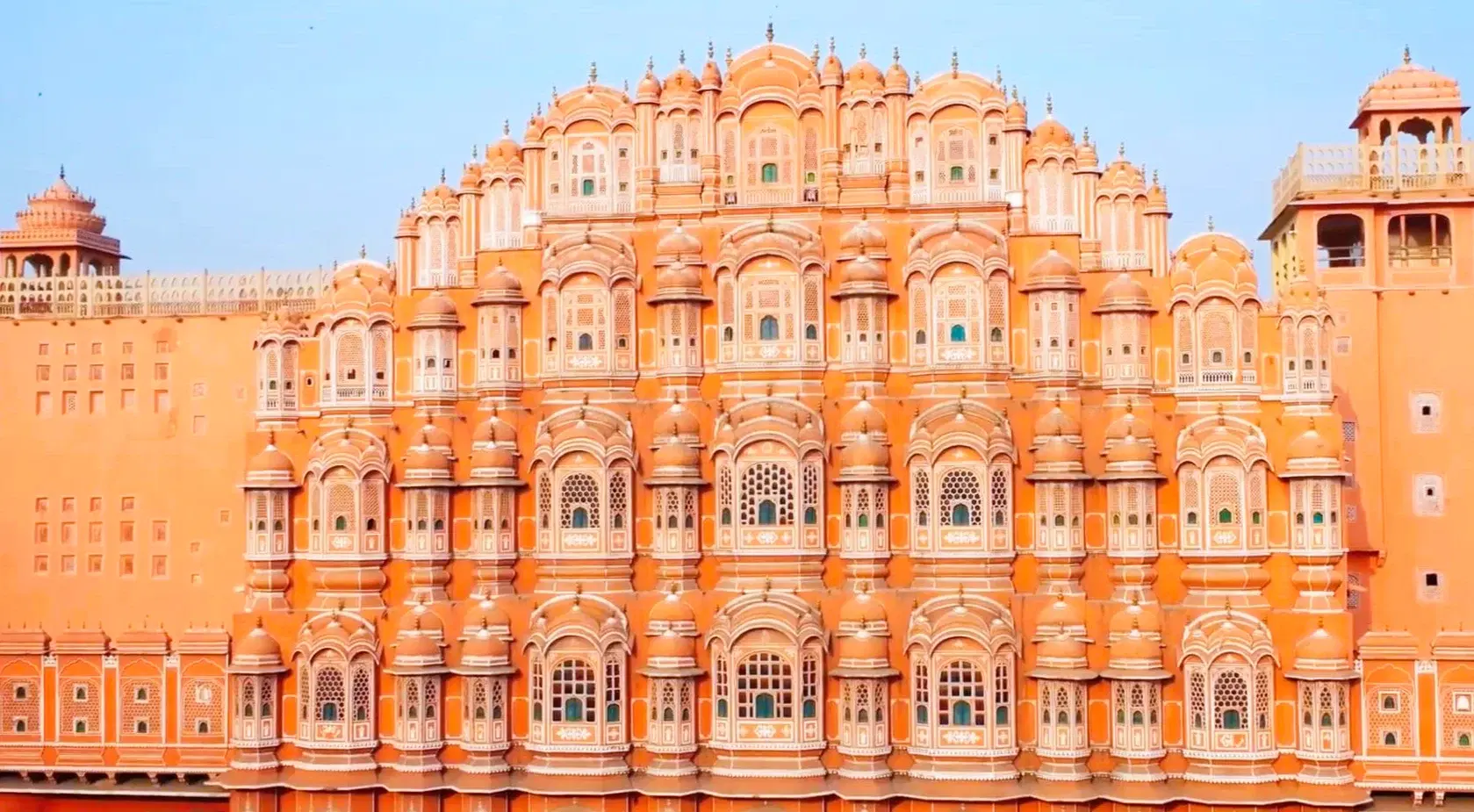
Hawa Mahal is a palace located in Jaipur. Its unique architecture resembles honeycomb windows and balconies. Built for queens and princesses. It is a five-story building. The palace is located close to Jantar Mantar and the bustling streets of Jaipur’s Pink City, making it easily accessible to tourists. The palace has several temples on different floors, including the Ratan Mandir and Prakash Mandir. Its design is like the crown. Its exterior looks mesmerizing at night.

Main Attractions

  • Admire the iconic 953-windowed facade from outside and inside.
  • Climb to the top for views of Jantar Mantar and City Palace.
  • Photography of the unique five-storey honeycomb structure.
Hawa Mahal's iconic 953-windowed pink sandstone facade — the Palace of Winds in Jaipur

Nearest Attractions

  • Jantar Mantar – ~0.5 km
  • City Palace – ~0.6 km
  • Albert Hall Museum – ~1.5 km

Visitor Information

Modest dress; comfortable footwear for climbing floors
6.Nahargarh Fort

Nahargarh Fort was built in 1734 by Sawai Jai Singh for his nine queens; Nahargarh Palace consists of nine palaces, each of which was dedicated to a specific queen. Sudarshangarh, the original name of the fort, was changed after local legends claimed that the spirit of Nahar Singh haunted the area and obstructed its construction.

Main Attractions

  • Explore the nine queens' palaces (Madhavendra Bhawan) inside the fort.
  • Enjoy panoramic views of Jaipur city from the fort ramparts, especially at sunset.
  • Visit the Nahargarh Biological Park located just outside the fort.
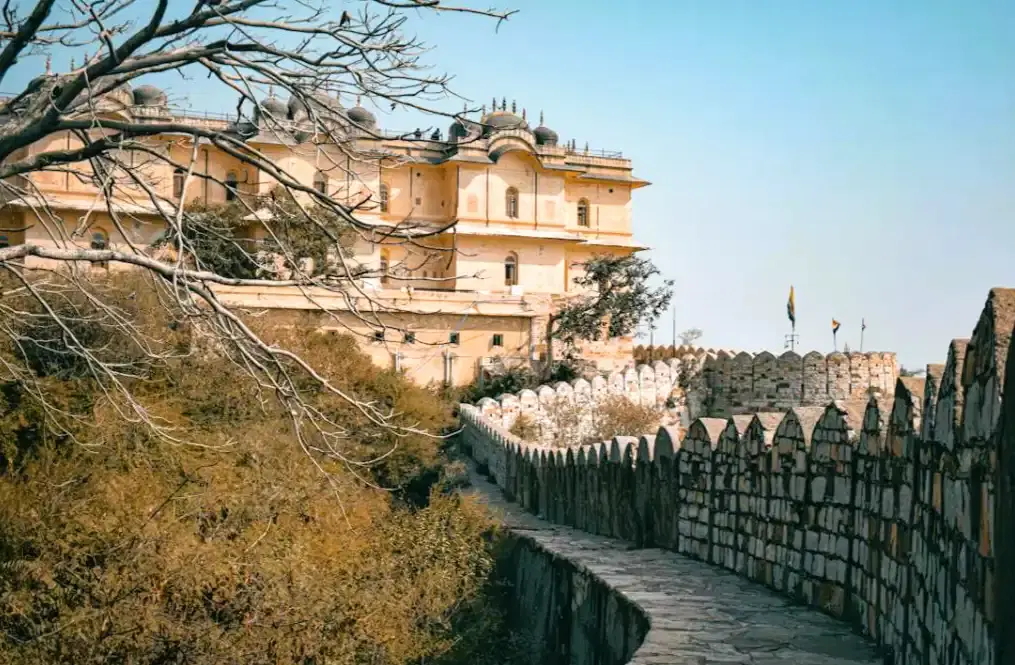
Nahargarh Fort's stone defensive wall walkway curving toward the palace complex with Indian flags and dry Aravalli hillside, Jaipur

Nearest Attractions

  • Jal Mahal – ~6 km
  • Jaigarh Fort – ~8 km
  • Amber Fort – ~15 km

Visitor Information

Casual comfortable clothing; walking shoes for uneven terrain

7.Govind Dev Ji Mandir

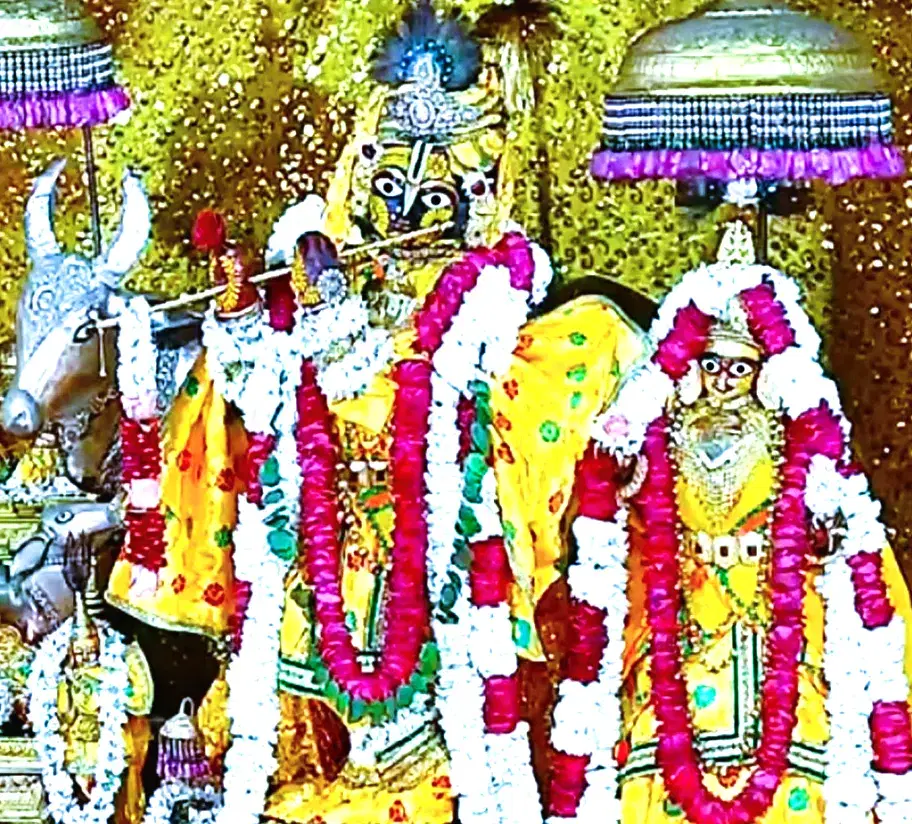
Govind Dev Ji Temple, the temple located in Jaipur, Rajasthan, was established by Maharaja Sawai Jai Singh II in 1735. It is located near the City Palace. In Jaipur, Lord Govind Ji or Krishna is not just worshipped—he is revered as the king. The local rulers considered him as Diwan of Govind Ji.

Main Attractions

  • Attend the seven daily aarti sessions (darshans).
  • Experience the spiritual atmosphere during Janmashtami celebrations.
  • Photography of the temple complex and gardens.
Govind Dev Ji Mandir — the Krishna temple near City Palace in Jaipur where the deity is worshipped as king

Nearest Attractions

  • City Palace – ~0.5 km
  • Jantar Mantar – ~0.8 km
  • Hawa Mahal – ~1 km

Visitor Information

Modest dress required; cover head and remove footwear

8.Albert Hall Museum

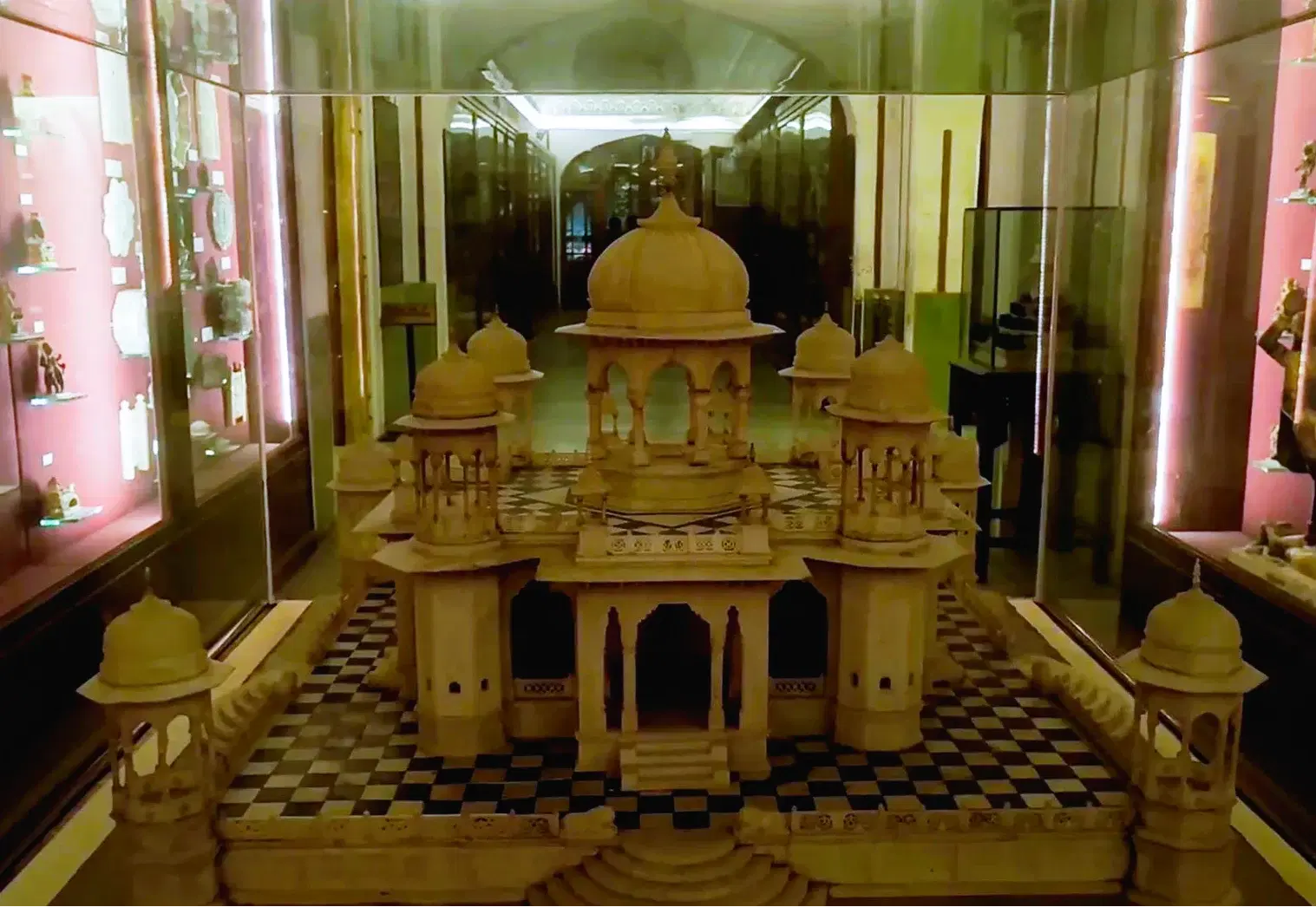
Albert Hall Museum is the oldest museum in Rajasthan. Located in Ram Niwas Garden, the museum houses an impressive collection of paintings, ancient coins, jewelry, carpets, and even a famous Egyptian mummy, attracting art and history enthusiasts alike. The museum also displays international art from Sri Lanka, Myanmar, Japan, and other countries.

Main Attractions

  • Explore rare collections of paintings, jewelry, carpets, and ivory artifacts.
  • See the famous Egyptian mummy on display.
  • Admire the stunning Indo-Saracenic architecture of the building.
Indo-Saracenic architecture of Albert Hall Museum illuminated at night in Jaipur

Nearest Attractions

  • Ram Niwas Garden – within premises
  • Hawa Mahal – ~1.5 km
  • Birla Mandir – ~2 km

Visitor Information

Casual comfortable clothing

9.Jal Mahal (Water Palace)

Built around 1699 and later renovated by Maharaja Sawai Jai Singh II, the Jal Mahal is situated in the middle of Man Sagar Lake and served as a hunting and leisure lodge for the royal family. You can visit the palace by boat. It features an art gallery that displays paintings illustrating the royal lifestyle.

Main Attractions

  • Photography of the palace from the lakeside promenade.
  • Birdwatching around Man Sagar Lake.
  • Enjoy the scenic views, especially at sunrise and sunset.
Jal Mahal palace reflected in Man Sagar Lake on the Jaipur-Amber Road at dusk

Nearest Attractions

  • Amber Fort – ~6 km
  • Nahargarh Fort – ~6 km
  • Galtaji Temple – ~8 km

Visitor Information

Casual; no entry to the palace itself for general visitors

10.Panna Meena Ka Kund

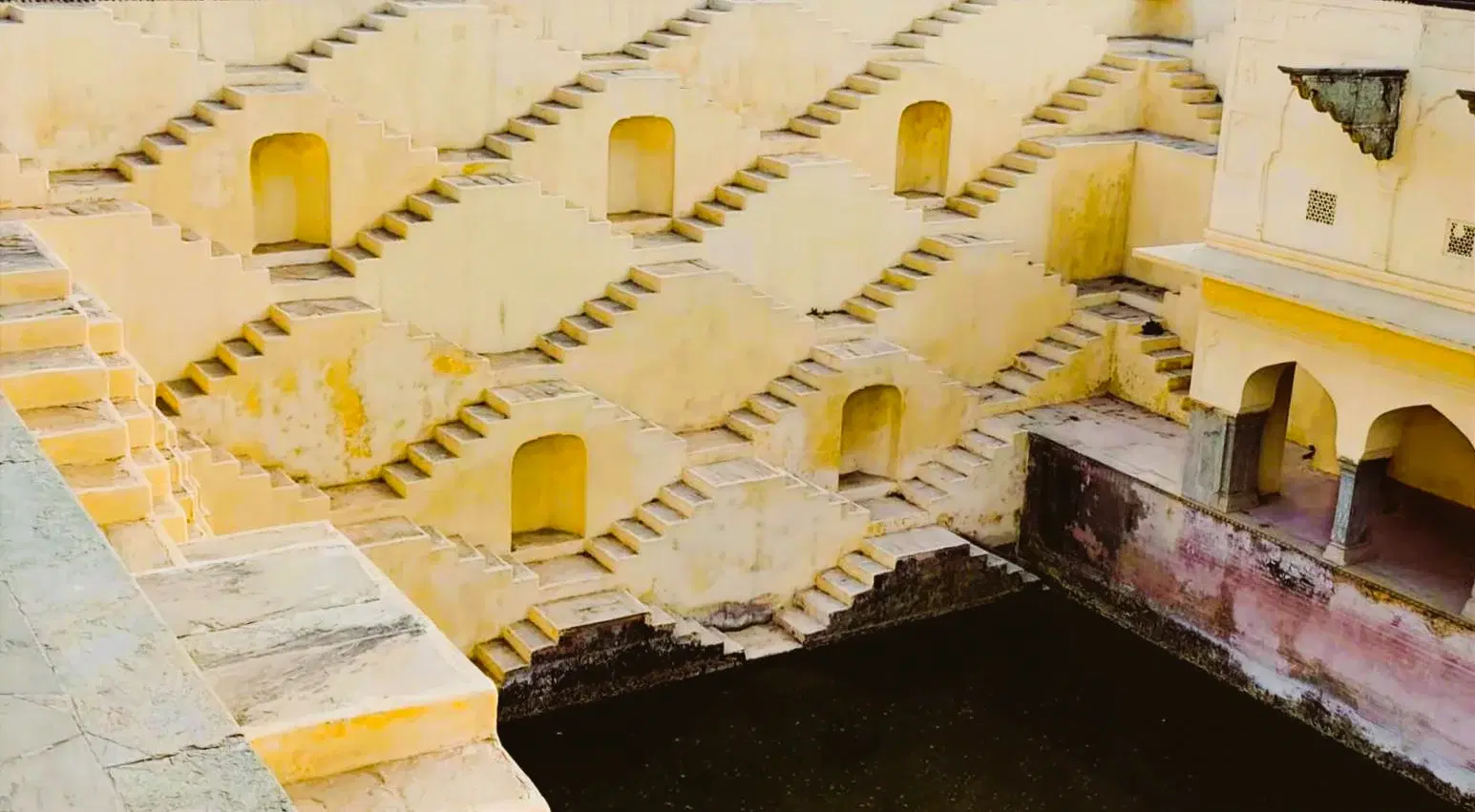
Just 2 kilometers from Amer Fort lies a historic stepwell, locally known as a Bawdi, offering a glimpse into the region’s ancient water conservation techniques. It features "V" shaped stairs, making it an architectural marvel. The name’s origin is debated—some say it’s named after its architect, while others believe it was named after a loyal servant.

Main Attractions

  • Explore the unique zigzag stepwell architecture.
  • Photography of the geometric symmetrical steps.
  • Learn about the historical water conservation system.
Symmetrical V-shaped zigzag stairs of Panna Meena Ka Kund stepwell near Amber Fort, Jaipur

Nearest Attractions

  • Amber Fort – ~0.5 km
  • Jaigarh Fort – ~2.5 km
  • Jal Mahal – ~8 km

Visitor Information

Casual; wear non-slip footwear on the stepped surfaces

11.Birla Mandir (Laxmi Narayan Temple)

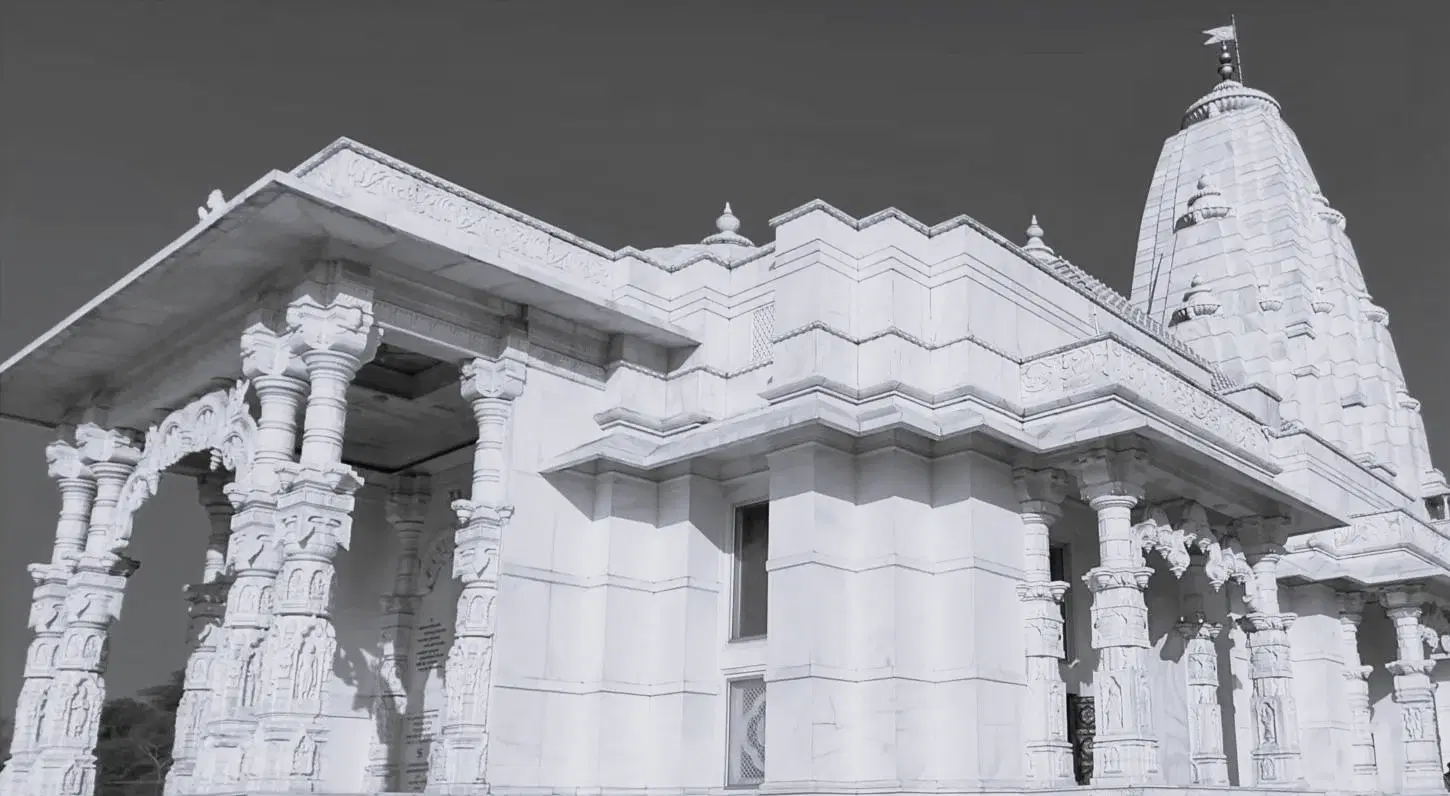
Built in 1988 by the B.M. Birla Foundation, Birla Mandir is dedicated to Goddess Lakshmi and Lord Vishnu. The temple, made of white marble, looks especially beautiful when lit up at night.

Main Attractions

  • Visit the stunning white marble temple dedicated to Lord Vishnu and Goddess Lakshmi.
  • Admire the stained glass windows depicting scenes from Hindu scriptures.
  • Attend the evening aarti in a peaceful atmosphere.
Birla Mandir white marble temple illuminated at night in Jaipur, Rajasthan

Nearest Attractions

  • Albert Hall Museum – ~2 km
  • Patrika Gate – ~3 km
  • Hawa Mahal – ~3 km

Visitor Information

Modest dress required; cover shoulders and knees; remove footwear

12.Galtaji Temple (Monkey Temple)

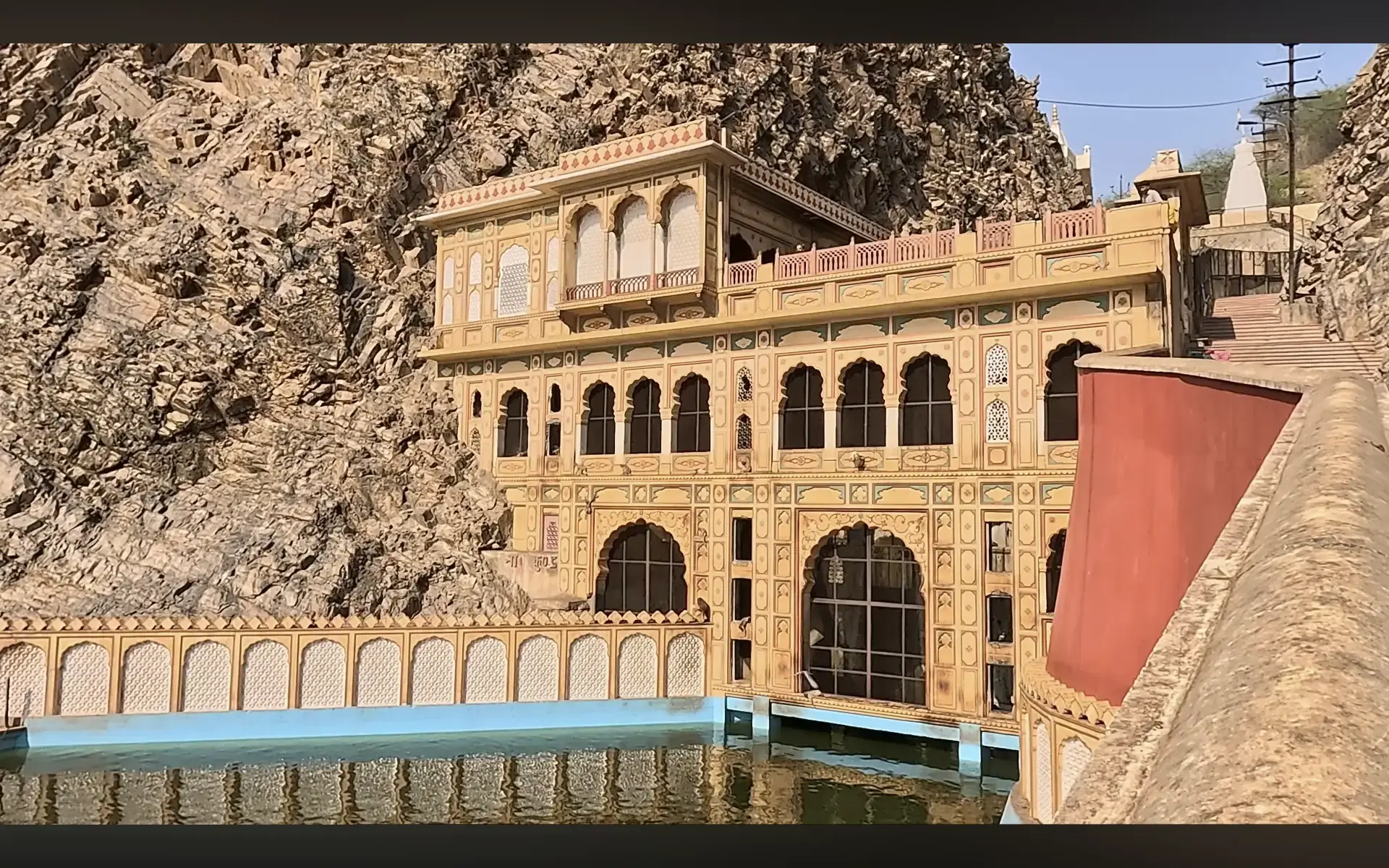
10 km from Jaipur. Galtaji is a group of temples, lakes, and waterfalls surrounded by beautiful hills. This ancient temple, dedicated to the revered sage Galav, is particularly famous for its large population of roaming monkeys. Hanuman Ji’s temple is at the entrance, and there are also temples for Ram, Janaki, and the Sun God. Although the site boasts remarkable beauty and historical significance, several areas have unfortunately been left unattended, resulting in noticeable deterioration.

Main Attractions

  • Visit the ancient temple complex with natural freshwater springs.
  • Spot the famous troops of monkeys at the monkey temple.
  • Trek through the Aravalli Hills surrounding the temple.
Galtaji Monkey Temple complex with natural freshwater kunds in the Aravalli Hills, Jaipur

Nearest Attractions

  • Sisodia Rani Garden – ~4 km
  • Jal Mahal – ~8 km
  • Amber Fort – ~10 km

Visitor Information

Modest dress recommended; watch belongings around monkeys

13.Patrika Gate

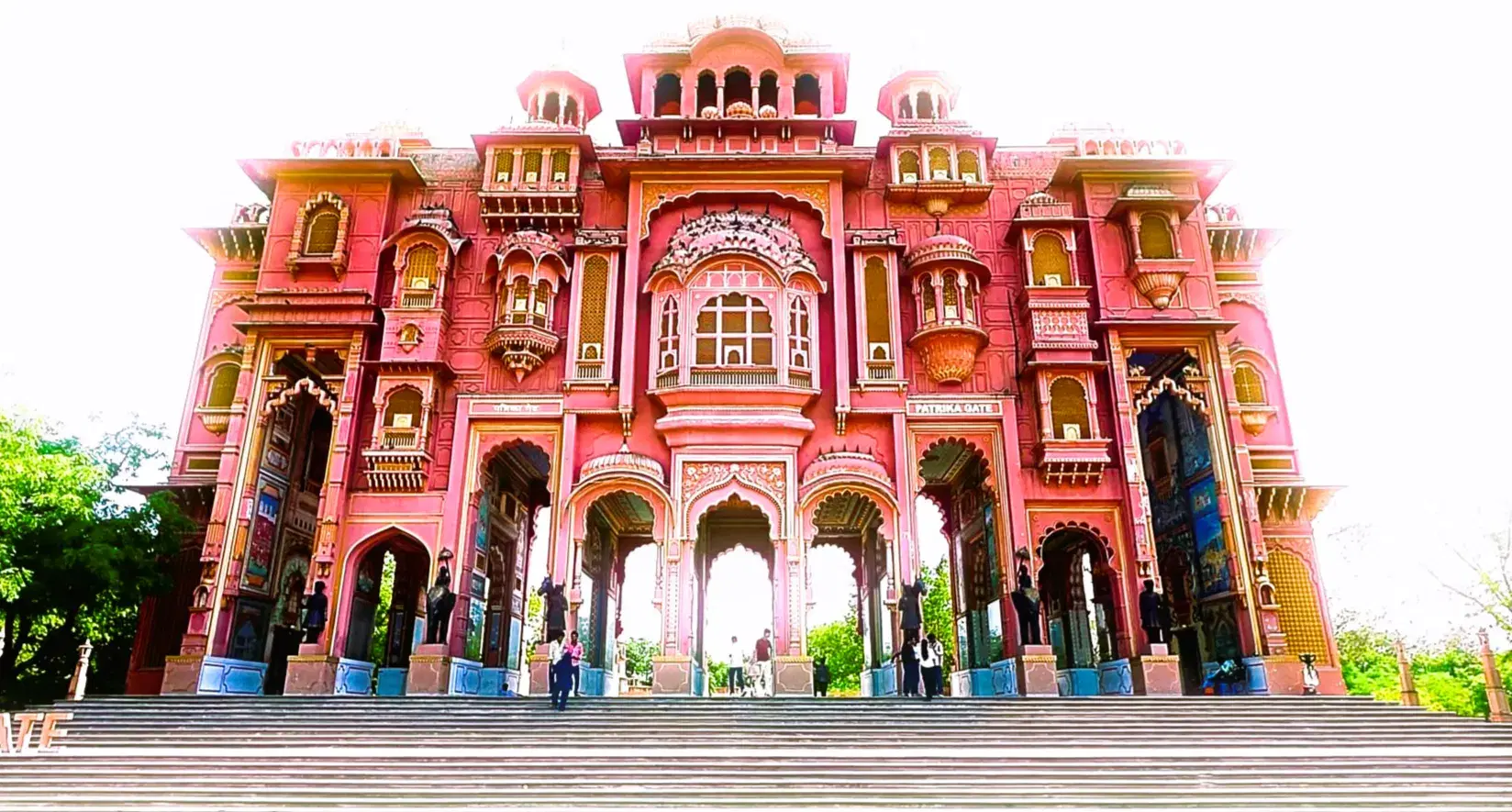
Patrika Gate, known for its vibrant architecture, marks the entrance to Jawahar Circle Garden—the largest circular park in Asia. The pillars of every gate are decorated with beautiful artwork of warriors and Rajasthani culture. It’s a popular spot for photography and reel YouTubers.

Main Attractions

  • Photography of the ornately painted nine-arch gateway.
  • Admire the intricate Rajasthani murals and carvings on each arch.
  • Evening visit for beautiful lighting and atmosphere.
Front view of Patrika Gate's ornate rose-pink Rajasthani facade with wide staircase and intricate carved detailing at Jawahar Circle, Jaipur

Nearest Attractions

  • Birla Mandir – ~3 km
  • Albert Hall Museum – ~4 km
  • Chokhi Dhani – ~8 km

Visitor Information

Casual; best visited in the evening for beautiful lighting

14.Chokhi Dhani

Chokhi Dhani is a well-known cultural resort situated about 20 kilometers from Jaipur Railway Station. It is dedicated to replicating a traditional Rajasthani village and its culture. Entry is ticket-based. Additional charges apply for any additional purchases or activities. Many activities are available for visitors, including bullock cart rides, boat rides, cave exploration, games, puppet shows, traditional dance performances, elephant rides, camel rides, and shopping. You can also savor local Rajasthani cuisine. If you wish to relax, a traditional khatiya (cot) is available for you to rest.

Main Attractions

  • Experience traditional Rajasthani folk music, dance, and puppet shows.
  • Enjoy an authentic Rajasthani thali dinner.
  • Camel and elephant rides, magic shows, and cultural activities.
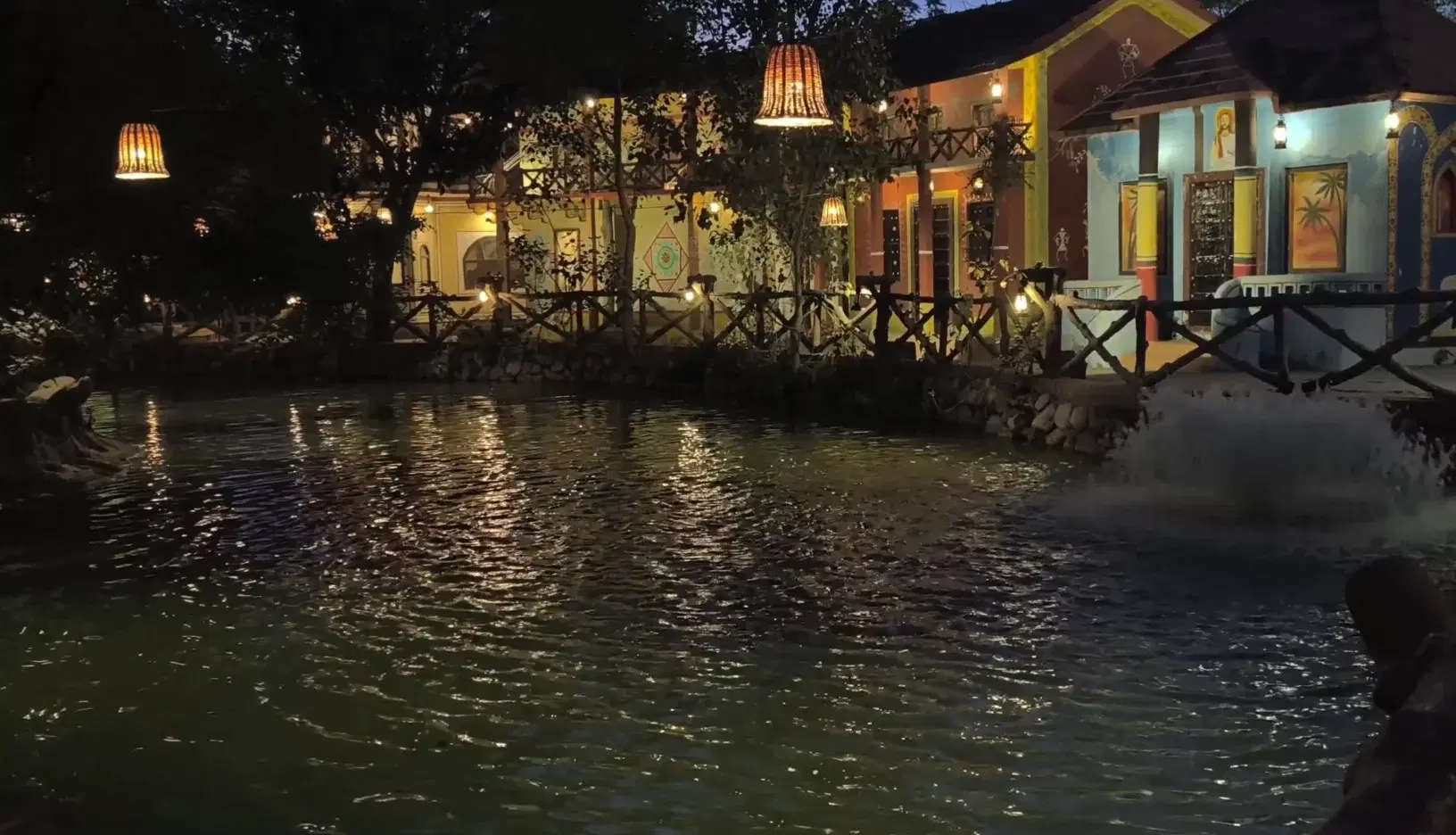
Chokhi Dhani's illuminated traditional Rajasthani village resort at night with a decorative pond, hanging lanterns, and warm-lit heritage buildings reflected in the water, Jaipur

Nearest Attractions

  • Patrika Gate – ~8 km
  • Sanganer – ~10 km
  • Albert Hall Museum – ~12 km

Visitor Information

Comfortable casual clothing; traditional Rajasthani attire available for rental inside

How to Reach Jaipur

Jaipur enjoys excellent road connectivity, particularly with Delhi and several other prominent cities across northern India. Jaipur is conveniently accessible by road; you can drive or take a bus from Delhi, which is approximately 268 km away. Traveling from Delhi to Jaipur by road typically takes about 5 to 6 hours, with Sindhi Camp serving as the city’s primary bus terminal for intercity and local routes.
Jaipur Junction is the main railway station. Trains connect with Delhi, Mumbai, and many other cities. Jaipur Railway Station is just 2 kilometers from the city center, making it easy for travelers to reach. For getting around within Jaipur, visitors can choose from a range of local transportation options, including taxis, auto-rickshaws, and city buses, all of which are readily accessible.
Jaipur International Airport is located about 12 km from the city centre. The city is well-connected to major destinations across India by road, rail, and air, making it a convenient base for exploring Rajasthan. Taxis and cabs are available everywhere, every time.

FAQs

The best time to visit Jaipur is November to February when the weather is pleasant (10-27°C). Avoid summer months (April-June) as temperatures can soar above 45°C. The monsoon season (July-September) brings relief but occasional heavy rains.
2-3 days are sufficient to cover major Jaipur attractions, including Amber Fort, City Palace, Hawa Mahal, Jantar Mantar, Jal Mahal, and local markets. Add an extra day to explore nearby Ajmer-Pushkar or for a more relaxed experience.
Top attractions include Amber Fort, City Palace, Hawa Mahal, Jantar Mantar, Jal Mahal, Nahargarh Fort, Jaigarh Fort, Albert Hall Museum, Patrika Gate, and Chokhi Dhani for cultural experiences.
Yes, Jaipur is generally safe for female tourists. The Pink City is tourist-friendly and well-secured. However, exercise normal precautions: avoid isolated areas after dark, use registered taxis, dress modestly when visiting temples, and be wary of overly friendly strangers.
Jaipur is famous for jewelry, textiles, handicrafts, blue pottery, precious stones, bandhani fabrics, and mojris (traditional footwear). Best shopping areas: Johari Bazaar, Bapu Bazaar, Tripolia Bazaar, and modern malls like World Trade Park.