Peak season
November–February
Comfortable weather, active beach services, and greater demand for accommodation.

South Goa combines the long beach belt around Colva, Benaulim, Varca, Cavelossim, and Mobor with the more dramatic Canacona coast around Agonda, Palolem, Patnem, and Galgibaga.
This guide covers the main beaches, Cabo de Rama Fort, Cotigao Wildlife Sanctuary, seasonal planning, local food, transport, and a practical itinerary without treating the region as a single compact beach town. Travelers seeking a busier beach and nightlife circuit can compare it with the best places to visit in North Goa.

Palolem is a curved bay and one of the best-known bases on the Canacona coast.
Need a cab in South Goa?
November to February usually offers the most comfortable weather for beaches, fort visits, and outdoor exploration. March to May is hotter, while the monsoon brings rougher sea conditions and reduced seasonal beach services.
November–February
Comfortable weather, active beach services, and greater demand for accommodation.
March–May
Hot and humid; schedule beaches and heritage stops early or late in the day.
June–September
Green landscapes and heavy rain; swimming, boating, and some beach services may be restricted.
October
Weather generally begins to settle, but confirm current sea and operator conditions.
Palolem is a curved bay between two headlands in Canacona and one of South Goa's best-known beach bases. Fishing activity, seasonal beach huts, restaurants, and access to nearby coves give it more energy than the quieter stretches farther north or south.
Use the central beach for an easy walk and meal, then explore nearby Colomb, Patnem, or Rajbag if you want a slower setting. Boat trips may be offered when conditions allow, but routes, wildlife sightings, and access are never guaranteed.
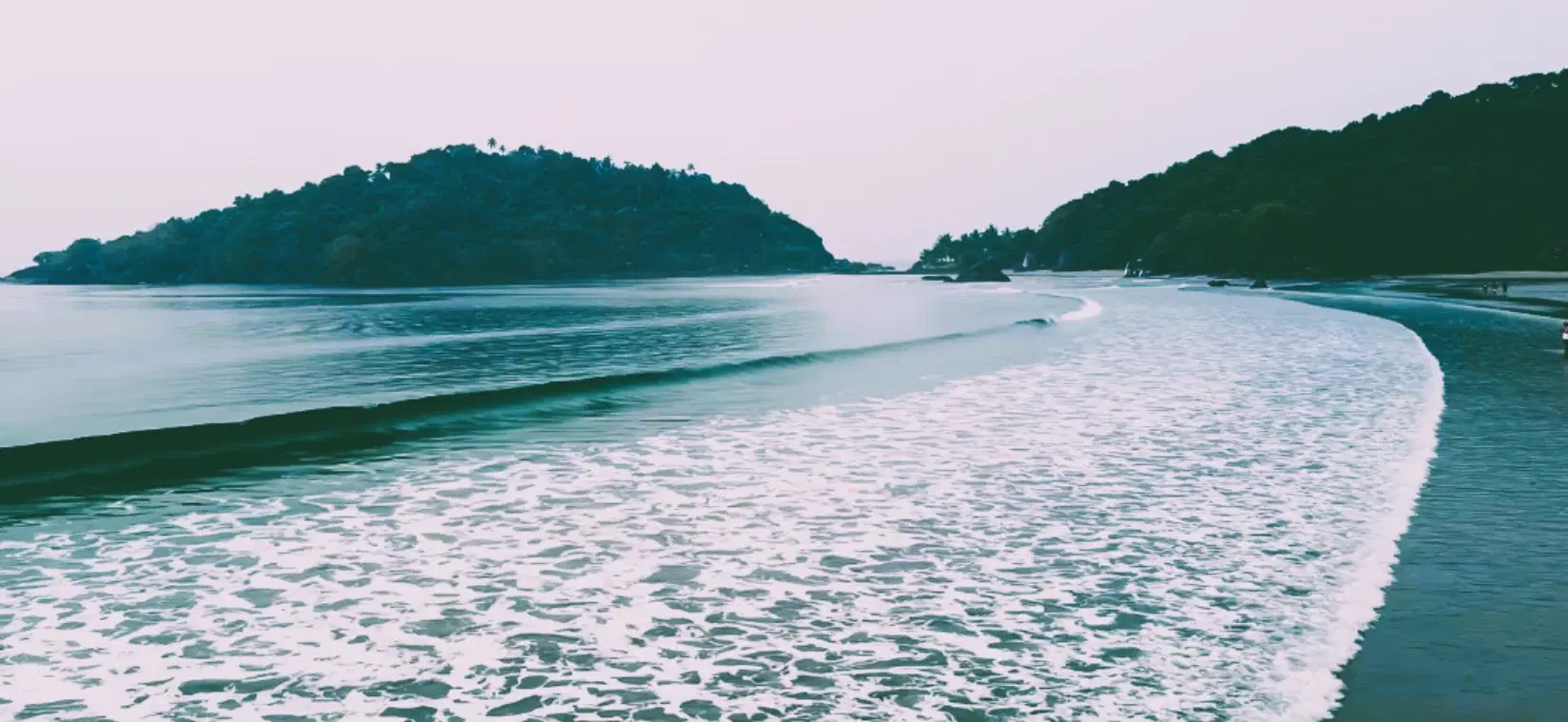
Seasonal services and sea access vary with weather. Keep swimming within supervised areas.
Agonda is a long beach in Canacona framed by palms and a low headland. Its spread-out layout and lighter commercial activity make it attractive to travelers who prefer long walks and a quieter stay than the central Palolem area.
Agonda is associated with protected turtle nesting activity. Visitors should never approach nests, use flash, or enter marked conservation zones. Beach rules and seasonal restrictions take priority over sightseeing plans.
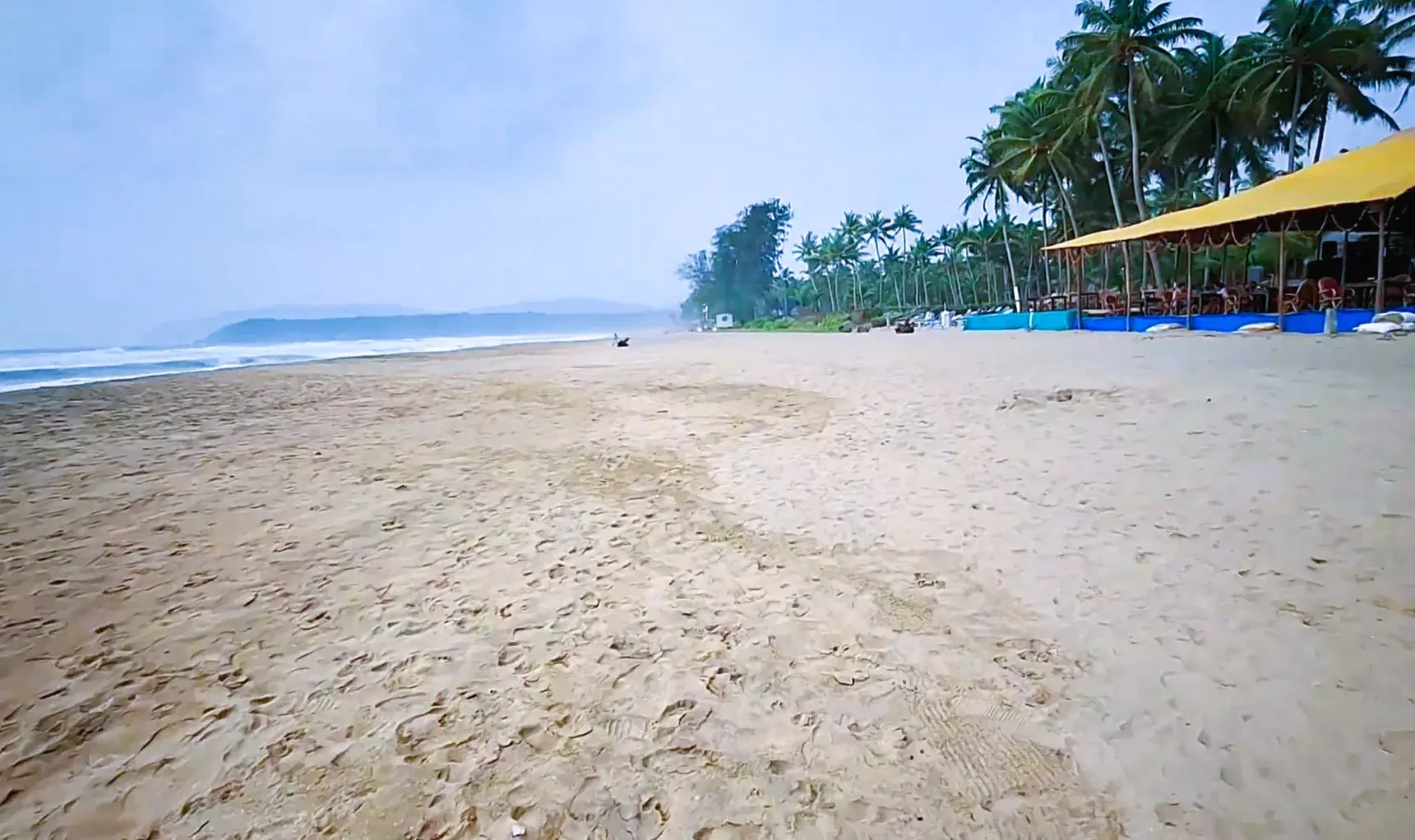
Swimming conditions vary; follow lifeguard warnings and keep away from protected nesting sections.
Butterfly Beach is a small, forest-backed cove on the Canacona coast between the Palolem and Agonda areas. Its limited road approach and compact shoreline make the journey part of the experience, but the beach should not be described as reliably empty or accessible by one fixed route.
Boat operators may offer trips from nearby beaches when sea conditions permit, while land approaches can be rough, seasonal, and unsuitable for many travelers. Confirm the current route locally, carry water, and leave before poor light or changing weather makes the return difficult.
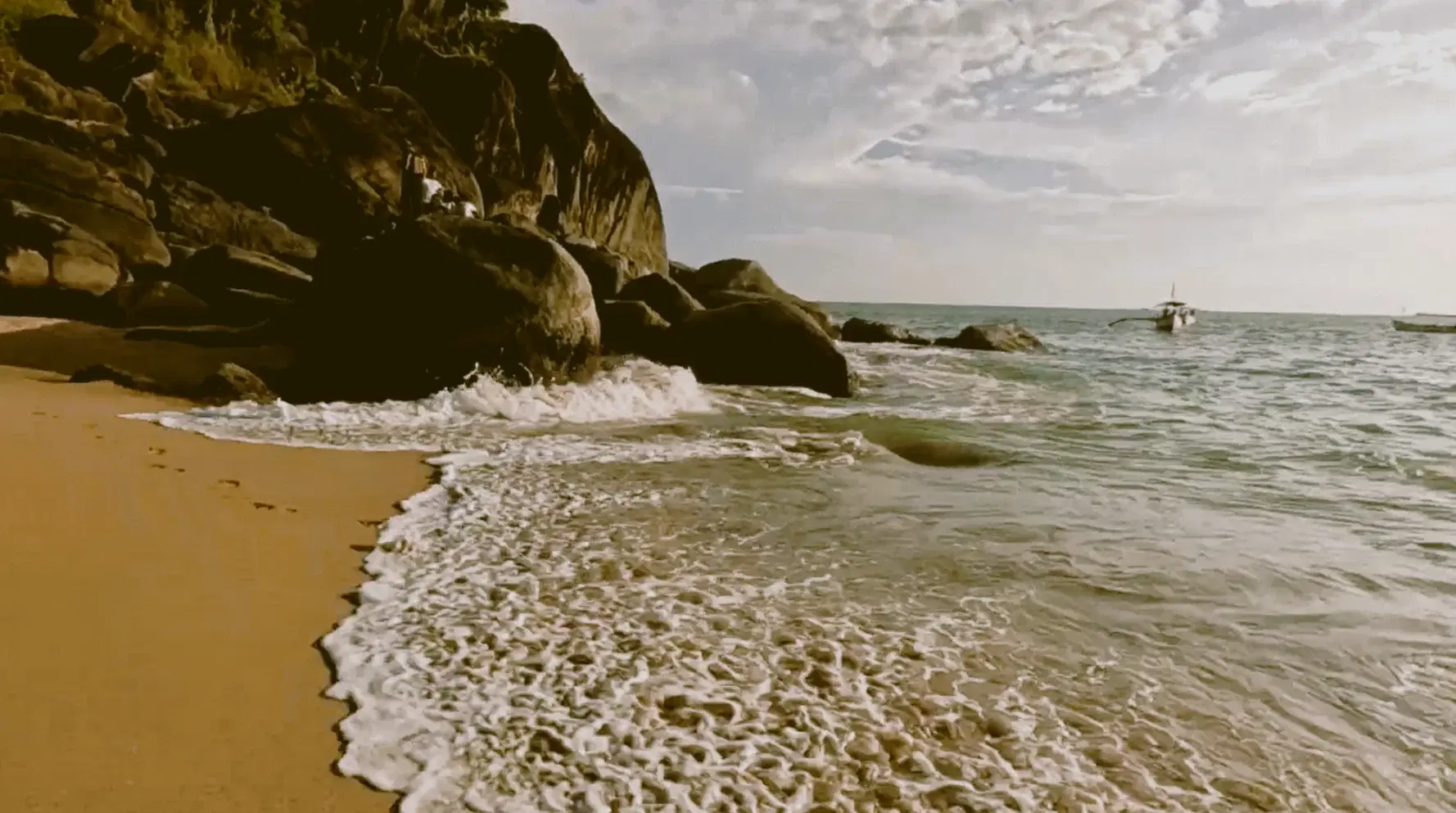
Facilities and supervision may be limited. Carry water, sun protection, and a reliable return plan.
Cabo de Rama is an old clifftop fort south of Margao with broad views over the Arabian Sea. The site predates Portuguese control and now survives largely as a scenic ruin, with walls, gateways, and a chapel within the wider fort area.
The open ground is exposed and uneven, and edges require caution. Current access can be affected by conservation or restoration work, so confirm local conditions before making a long detour.
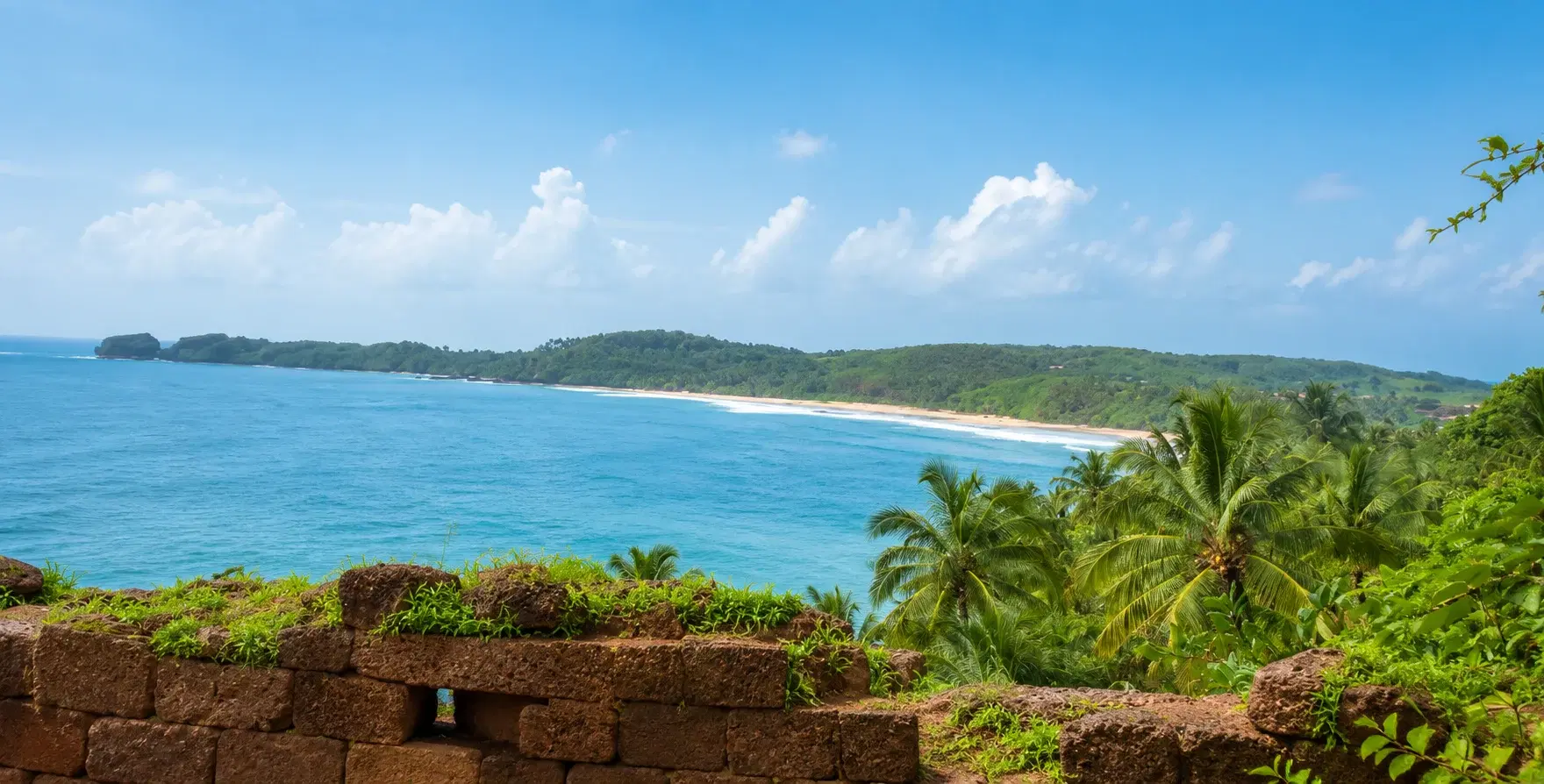
Surfaces are uneven, and shade is limited, making some sections difficult for visitors with reduced mobility.
Cotigao protects about 86 square kilometers of moist-deciduous forest with semi-evergreen and evergreen patches along Goa's southern border. Tall, layered forest, streams, birdlife, interpretation facilities, and watchtowers are the main reasons to visit.
The sanctuary is better approached as a forest and birdwatching experience than as a guaranteed large-animal safari. Confirm current entry, trail, guide, watchtower, and accommodation arrangements with the Goa Forest Department before departure.
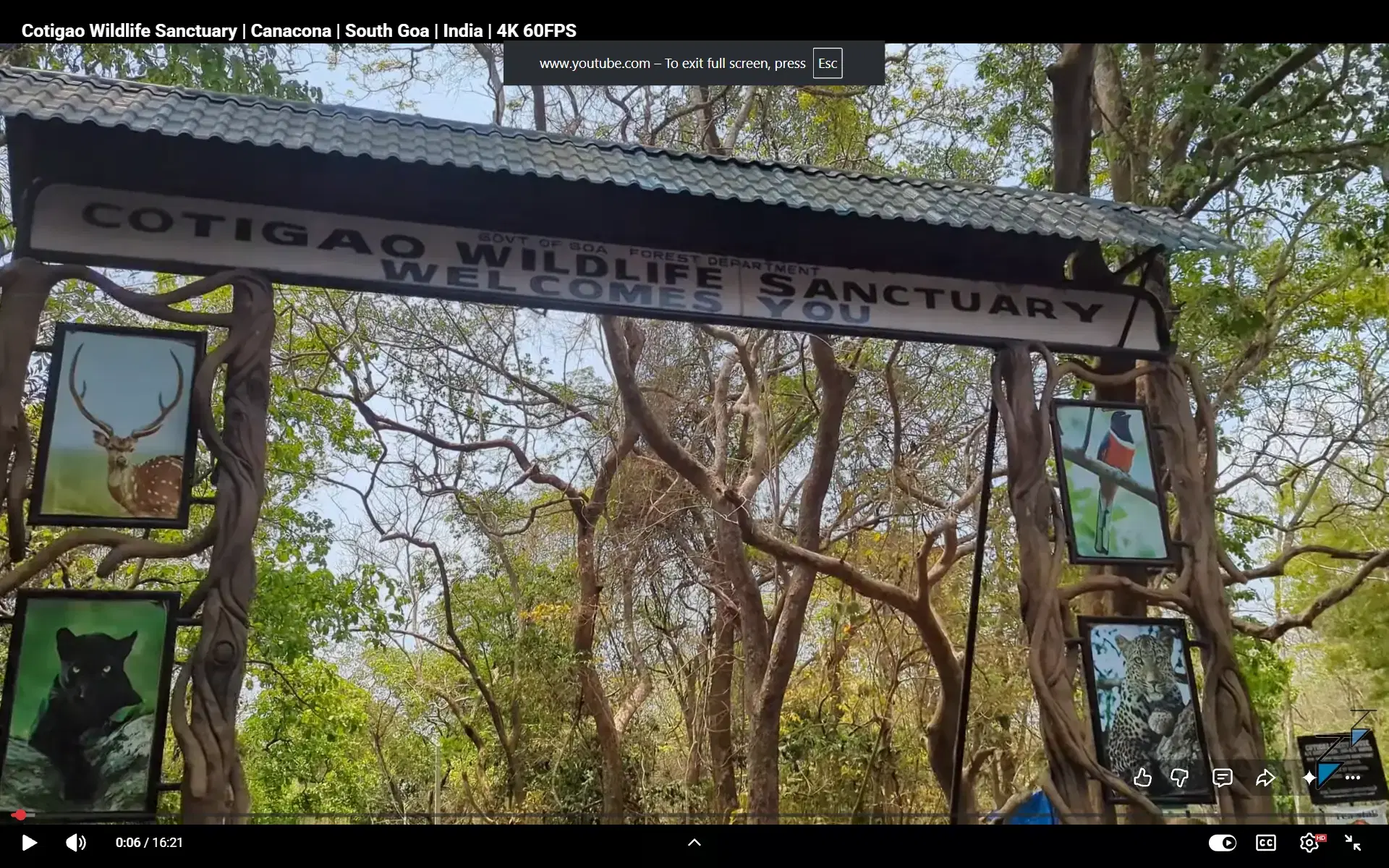
Permissions and facility access can change. Contact the Forest Department before planning special activities or an overnight stay.
Dudhsagar Falls descends through the Western Ghats inside the Bhagwan Mahavir protected area near Mollem. The multi-tiered cascade and surrounding forest create one of Goa's best-known inland landscapes, far removed from the coastal beach circuit.
Access is regulated and changes with rainfall, wildlife protection, track conditions, and official closures. The commonly used tourism circuit begins around Collem and may involve an authorized four-wheel-drive transfer followed by walking when the route is open. Railway tracks are active infrastructure, not a general pedestrian trail, so visitors must use only currently authorized access.
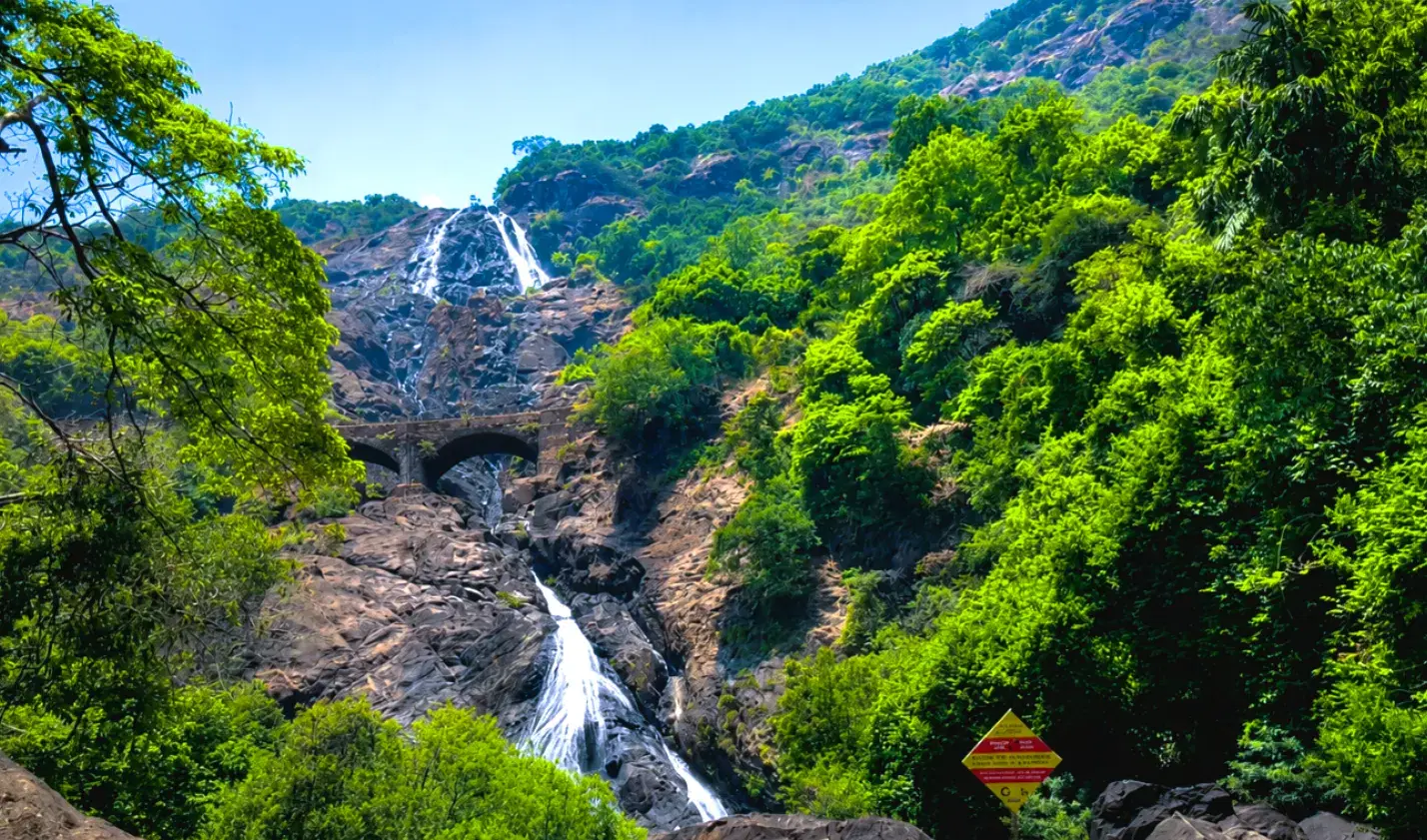
Do not walk on railway tracks, enter closed routes, feed wildlife, litter, or swim where authorities prohibit it. Access rules override any generic online itinerary.
The central South Goa beach circuit begins around Majorda and continues through Colva, Benaulim, Varca, Cavelossim, and Mobor. These adjoining areas offer a mix of broad sand, fishing activity, restaurants, resorts, and quieter access points.
Colva is the busiest hub, while Benaulim and Varca generally feel more spread out. Base selection matters: staying near Margao is convenient for transport, while a beach village reduces daily transfers.
Facilities differ by access point and season. Confirm transport for quieter beaches before staying into the evening.
Allow 2–3 hours
A smaller Canacona beach south of Palolem suited to a slower afternoon.
Allow 1–2 hours
A quieter southern beach associated with protected turtle nesting; observe every conservation restriction.
Allow 2–3 hours
A coastal stretch between the Arabian Sea and the Sal River with resorts, beach access, and river scenery.
Allow half day
South Goa's main transport and commercial center, useful for markets, local food, and rail connections.
Allow 2–3 hours
An inland heritage village; access to private houses or guided visits should be arranged in advance.
A staple combination of rice and a coconut-based fish curry, with recipes varying by community and kitchen.
Fish or seafood filled or coated with a tangy red masala before cooking.
A roasted-spice curry commonly prepared with chicken or other proteins.
A layered Goan dessert traditionally made with coconut milk, eggs, sugar, and ghee.
Day 1
Day 2
Day 3
Day 4 (optional)
South Goa works best as two connected but distinct journeys: the broad central beaches near Margao and the more dramatic Canacona coast farther south.
Choose a suitable base, group nearby stops, and adjust each day for sea conditions, seasonal access, and current conservation guidance.
Check these official resources for destination information and current notices. Confirm opening times, entry charges and access requirements before travelling.
Found something outdated? Send Traviya a correction.