Winter
November–February
Cooler sightseeing weather and the main White Rann season; nights can be cold and windy.

Kutch (Kachchh) is Gujarat's largest district and one of India's most varied road-trip regions. The White Rann is its best-known landscape, but a complete Kutch trip also includes Bhuj's museums and palaces, artisan villages, Mandvi's coast, remote pilgrimage sites and UNESCO-listed Dholavira.
This guide covers 15 of the best places to visit in Kutch, a realistic five-day itinerary, seasonal advice, local food, shopping and transport. Use Bhuj as the main base, compare hotels in Kutch, and arrange cab services in Kutch before starting the longer desert and coastal routes.
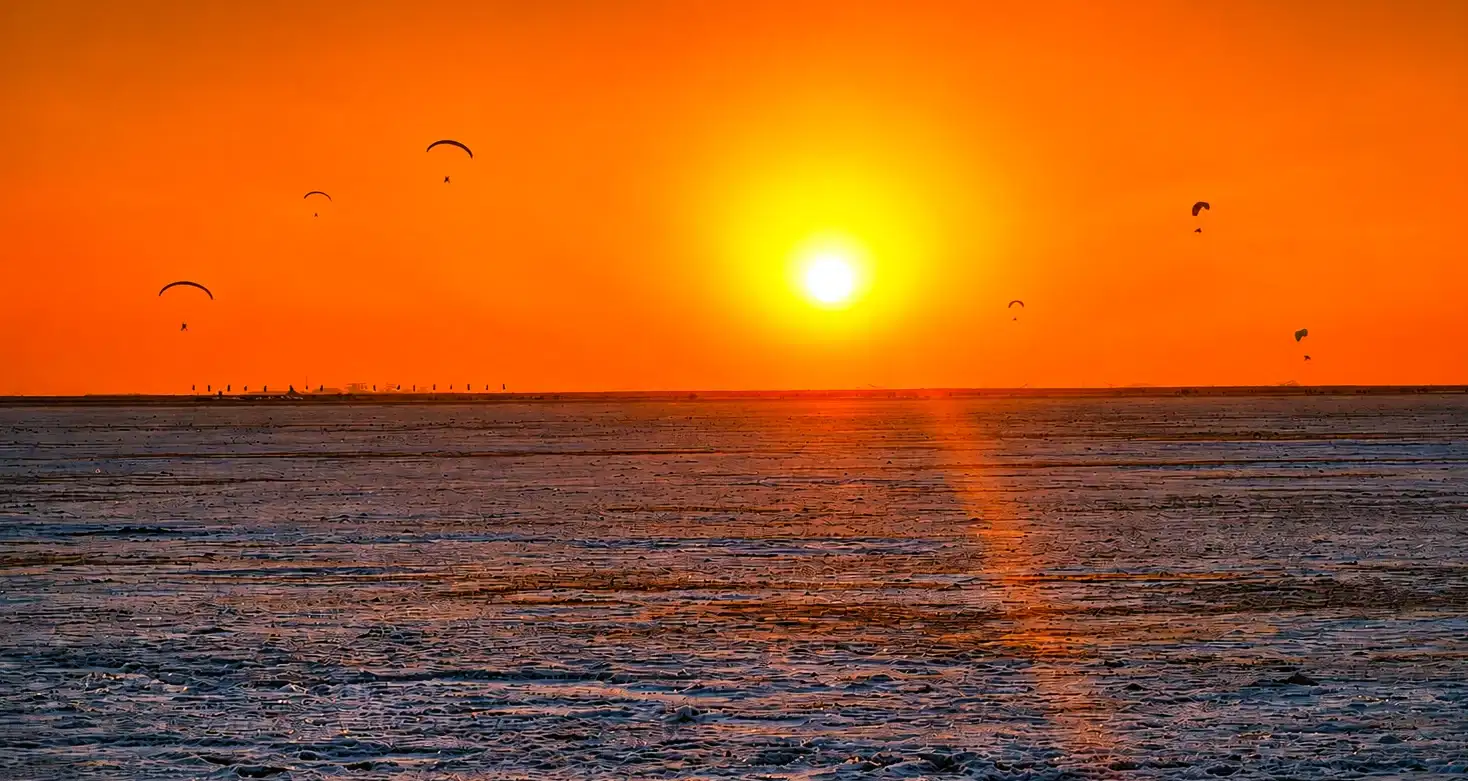
Sunset over the seasonal salt landscape of the Great Rann of Kutch.
Need a cab in Kutch?
November to February is generally the best time to visit Kutch for the White Rann, Bhuj sightseeing and long road journeys. October and March can also work, while summer heat and monsoon conditions require a more cautious plan.
November–February
Cooler sightseeing weather and the main White Rann season; nights can be cold and windy.
October
Useful for Bhuj and Mandvi, but confirm whether the White Rann visitor area is ready after the monsoon.
March
Often suitable for heritage and coastal routes, with warmer afternoons on exposed sites.
April–September
High heat or seasonal flooding can affect comfort and access across the Rann.
The Great Rann is a vast seasonal salt marsh that becomes the White Rann after monsoon water recedes and salt crystallizes across the dry surface. The designated visitor area near Dhordo is the focus for sunset views, photography and seasonal cultural programs.
Plan the visit around daylight and current access arrangements instead of treating the salt flats as an unrestricted driving area. Permit or identity checks may apply because this is a sensitive border region, and activities advertised during Rann Utsav can change from one season to the next.
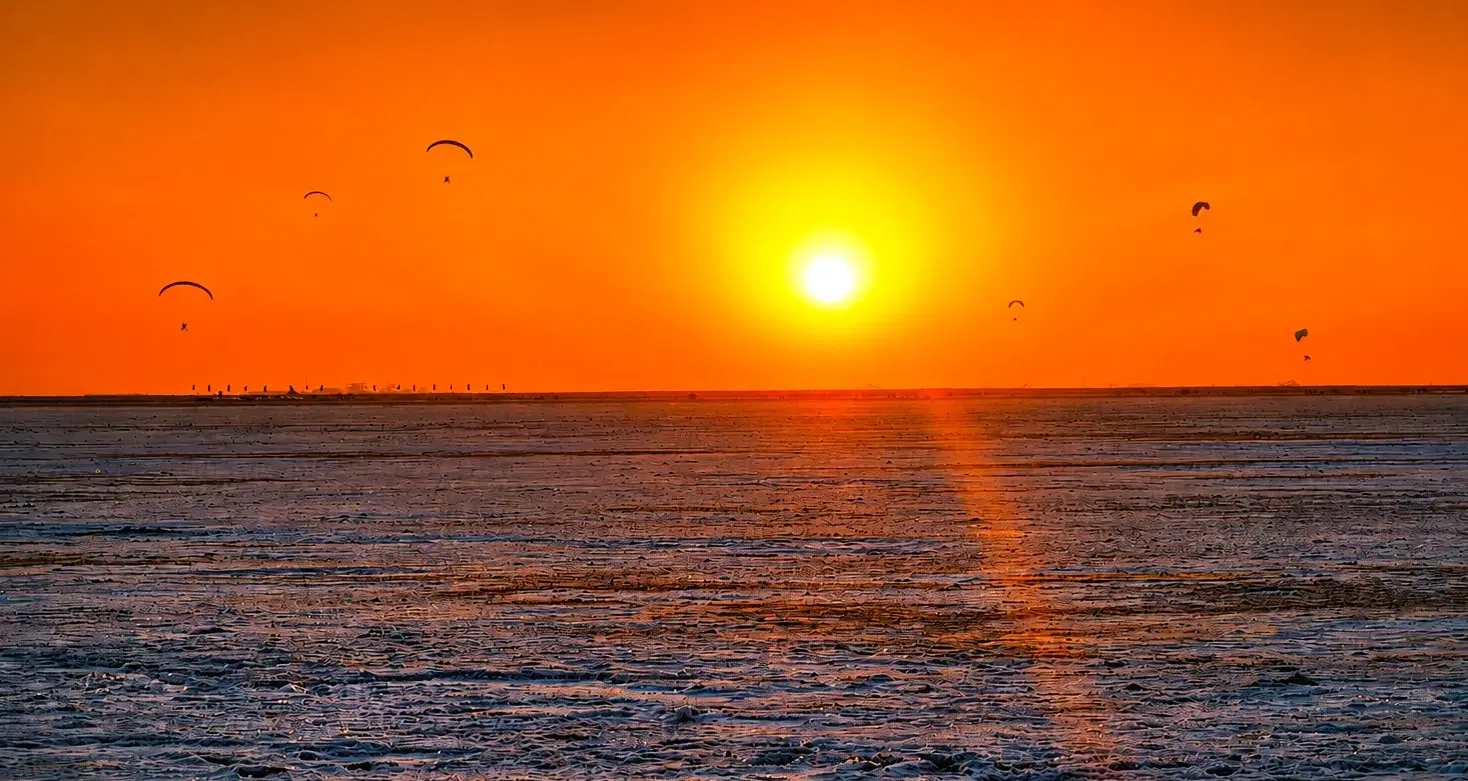
Permit and identity requirements can change. Check official Gujarat Tourism or district information shortly before travel.
Prag Mahal and Aina Mahal share a historic compound in central Bhuj but offer very different interiors. Prag Mahal was commissioned in the nineteenth century in an Italian Gothic style, while the eighteenth-century Aina Mahal is known for mirror work, glass and restored royal rooms.
Allow time for both buildings rather than rushing through the compound. Some sections, stairways or tower access may be restricted, so use the displayed route and confirm current tickets and opening hours before planning the rest of your Bhuj day.
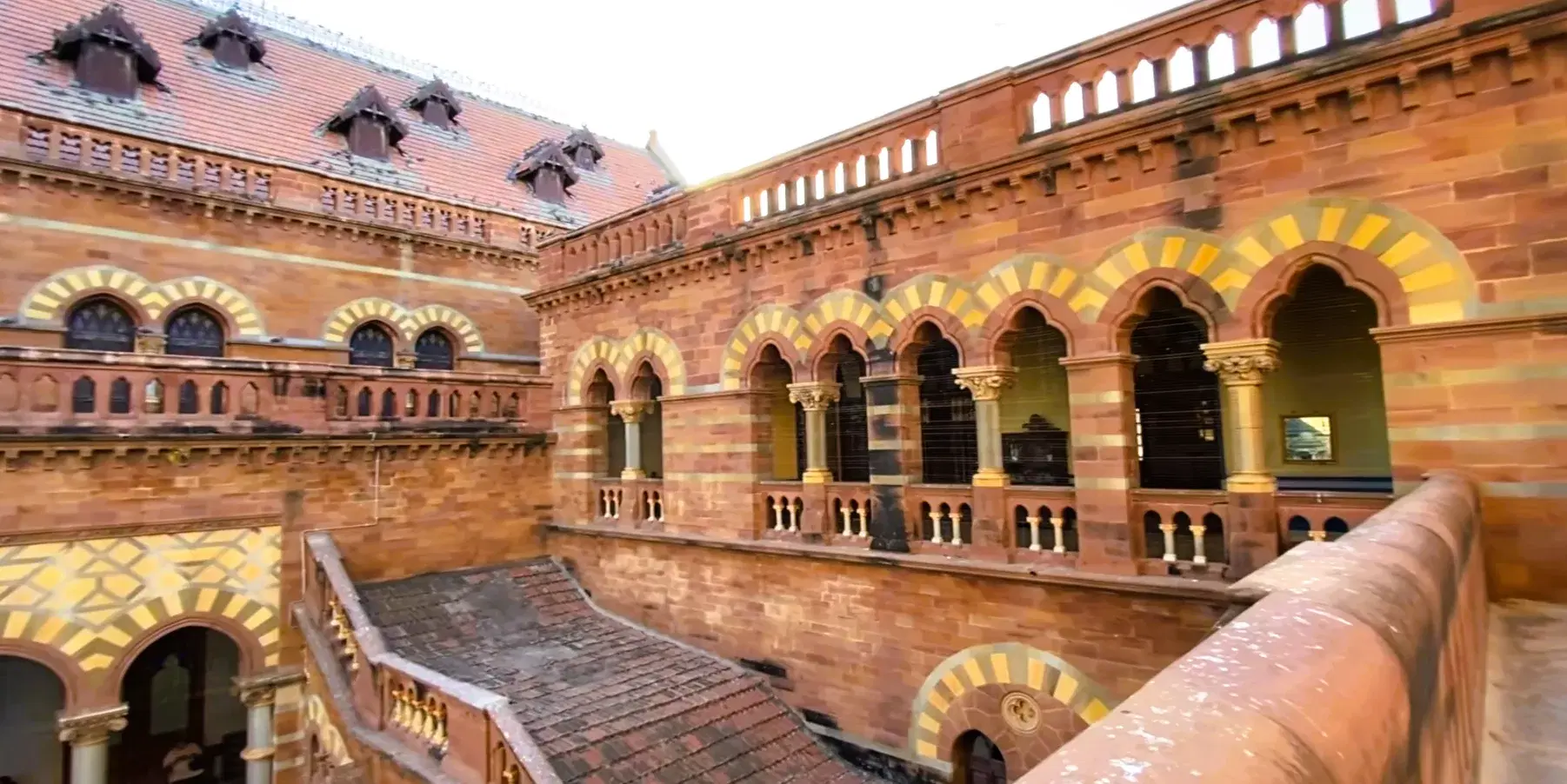
Tickets, weekly closures and accessible areas can change; confirm them at the compound entrance.
The Swaminarayan Temple in Bhuj is a white-marble complex distinguished by carved pillars, domes, shrines and a carefully maintained courtyard. It offers a calm spiritual stop within the city and can be combined with Bhuj’s palace and museum circuit.
This is an active place of worship rather than only an architectural attraction. Dress modestly, remove footwear where directed and follow the temple’s current rules for photography, bags and personal items.
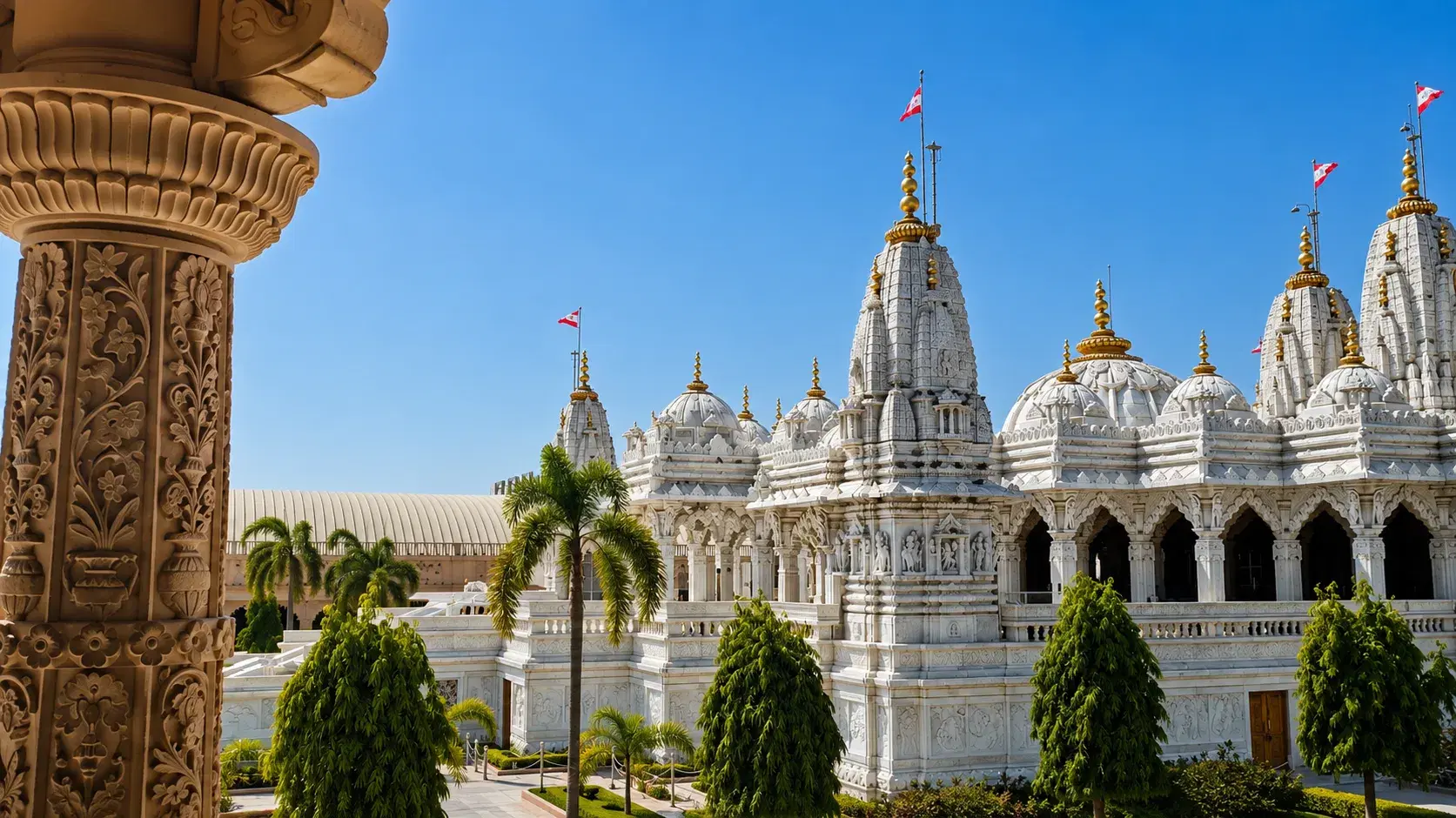
Follow all posted temple rules; access to individual areas can vary during services and festivals.
Smriti Van is a 470-acre memorial and museum on Bhujiyo Hill dedicated to the victims of the 2001 Kutch earthquake. Seven thematic museum blocks interpret geology, disaster impact, reconstruction, preparedness and the region’s recovery.
The wider memorial includes landscaped paths, water-conservation structures and a hilltop viewpoint, so a complete visit needs more time than a conventional indoor museum. The subject is reflective and emotionally serious; move through the galleries at an unhurried pace.
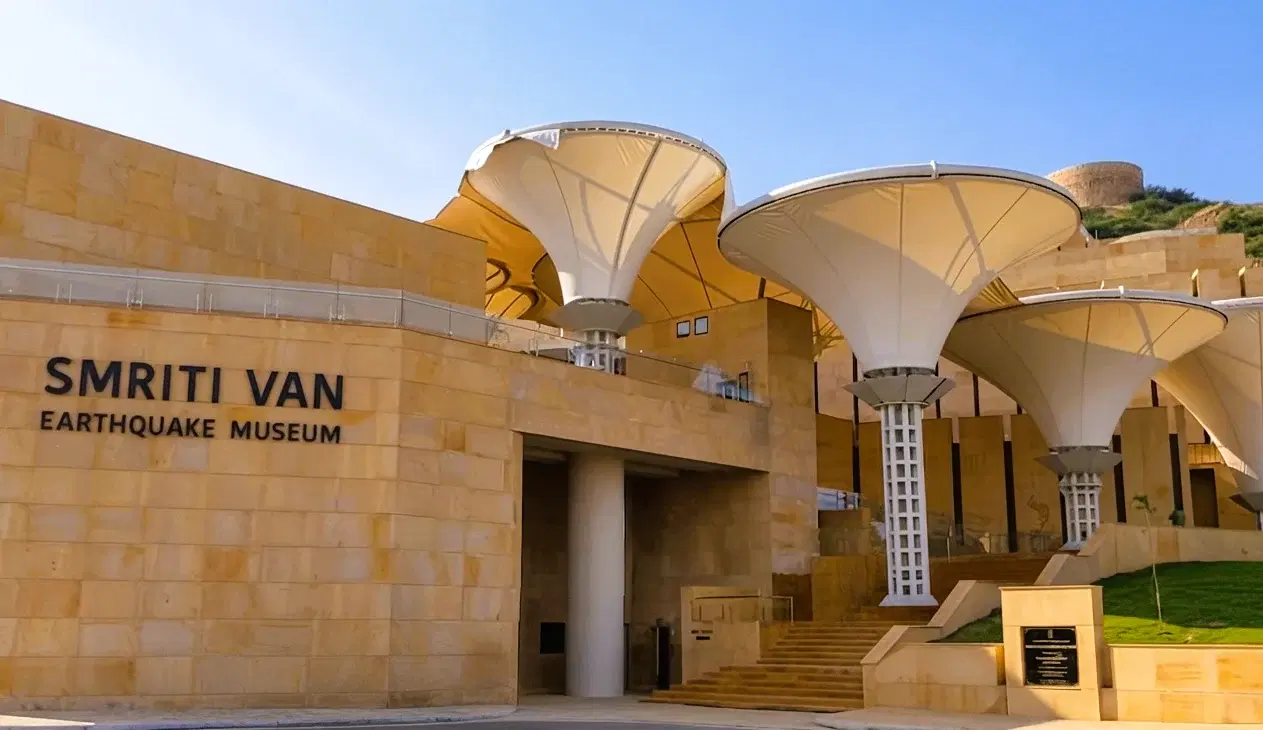
Museum hours, shuttle arrangements and access to outdoor sections can change; check the official Smriti Van information.
Kalo Dungar is Kutch’s highest point, about 462 meters above sea level, with broad views towards the Great Rann. The hill is also known for its long-established Dattatreya temple and its exposed, wind-swept landscape.
The viewpoint is commonly paired with the White Rann or Banni villages, but road time makes it a separate half-day element rather than a quick detour. Visibility changes with haze and season, and security restrictions apply near the border-facing side.
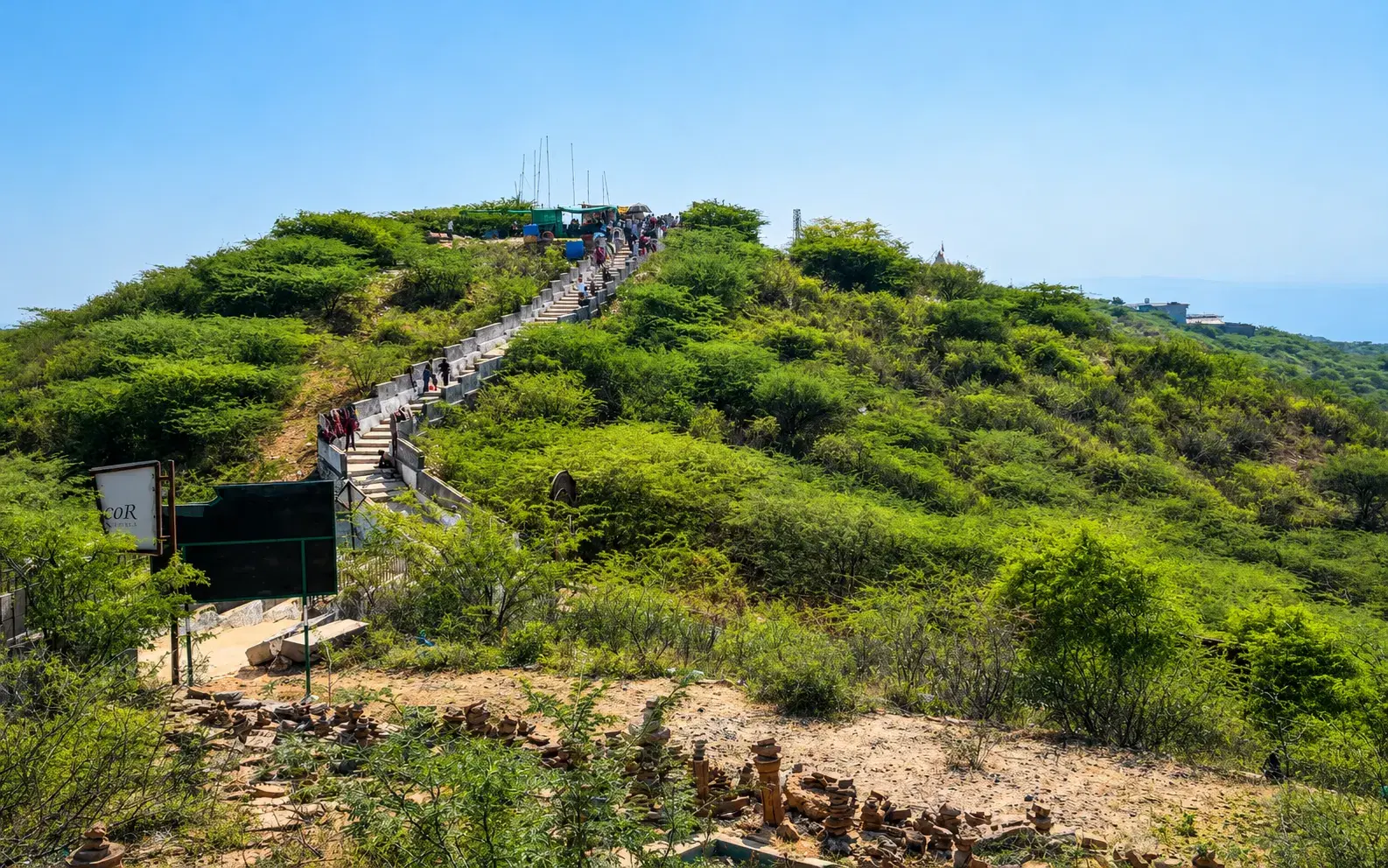
Border-area access and viewpoint limits can change; follow all local and security instructions.
Chhatardi is a group of domed royal cenotaphs southwest of Hamirsar Lake. These structures are memorials to members of Kutch’s royal family rather than burial tombs, and their carved pillars, arches and canopies create one of Bhuj’s most atmospheric heritage settings.
Some structures are weathered or damaged, which makes the site visually compelling but also requires care on uneven ground. Visit respectfully, avoid climbing fragile stonework and pair the stop with Hamirsar Lake or the nearby palace compound.
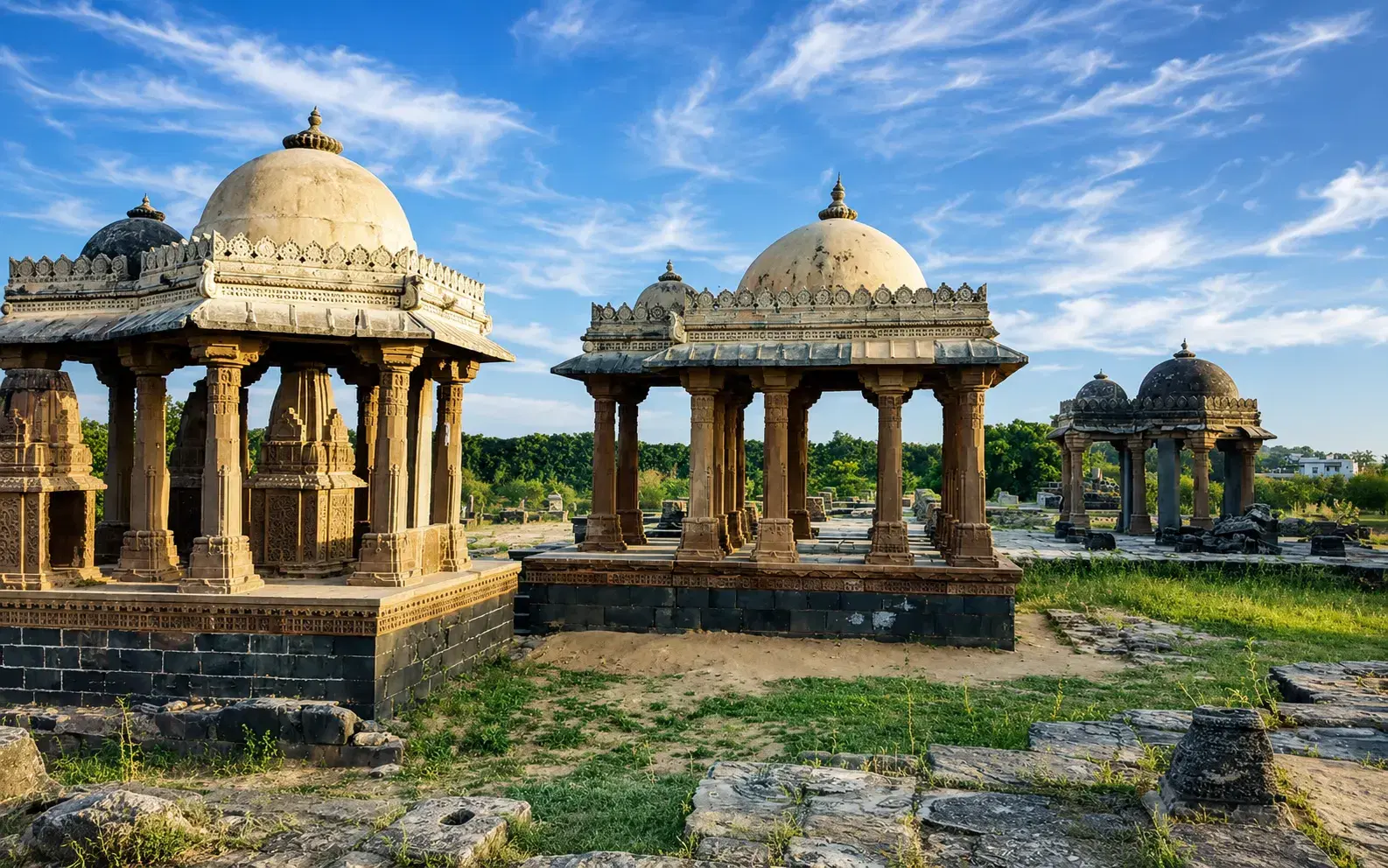
The site is exposed to sun and may have limited facilities; carry water and plan a short visit.
Mandvi Beach brings an Arabian Sea contrast to Kutch’s desert and heritage routes. The shore is popular for sunset walks and is best visited as part of a Mandvi day that also includes the town and Vijay Vilas Palace.
Water and beach activities depend on sea conditions, season and authorized operators, so do not assume that every advertised activity will be available. Keep a safe distance from rough surf, supervise children and follow lifeguard or local instructions.
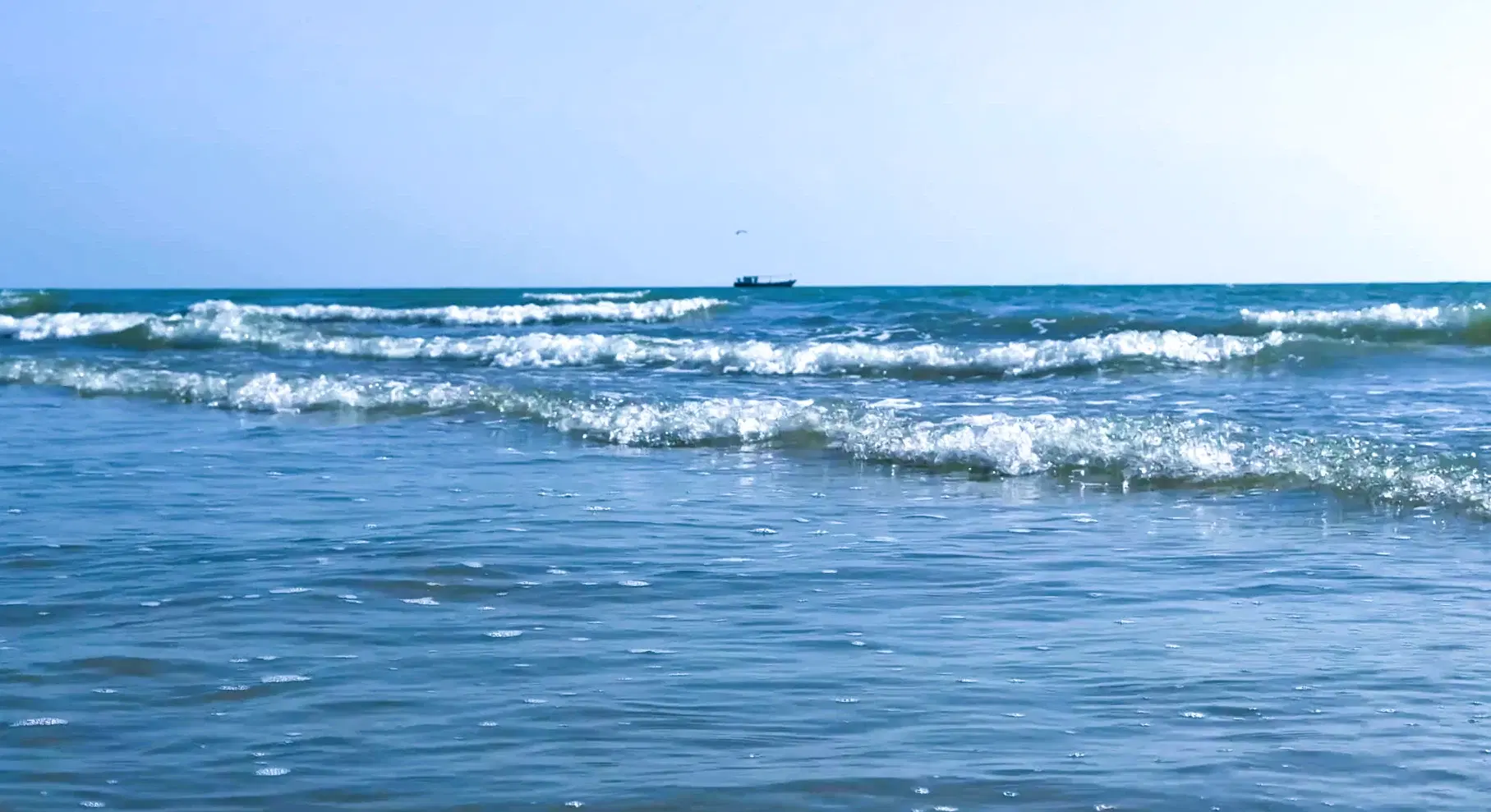
Activity availability and seasonal events change; verify conditions locally on the day of your visit.
Mata No Madh is an important pilgrimage village centered on Ashapura Mata, regarded as the patron deity of Kutch and household deity of its former Jadeja rulers. The temple complex is the main stop on the western Kutch route towards Lakhpat and Narayan Sarovar.
Pilgrimage periods can bring heavy crowds and changed traffic arrangements, so the visit needs more flexibility than an ordinary roadside temple stop. Dress modestly, observe queue systems and keep photography discreet around worship.
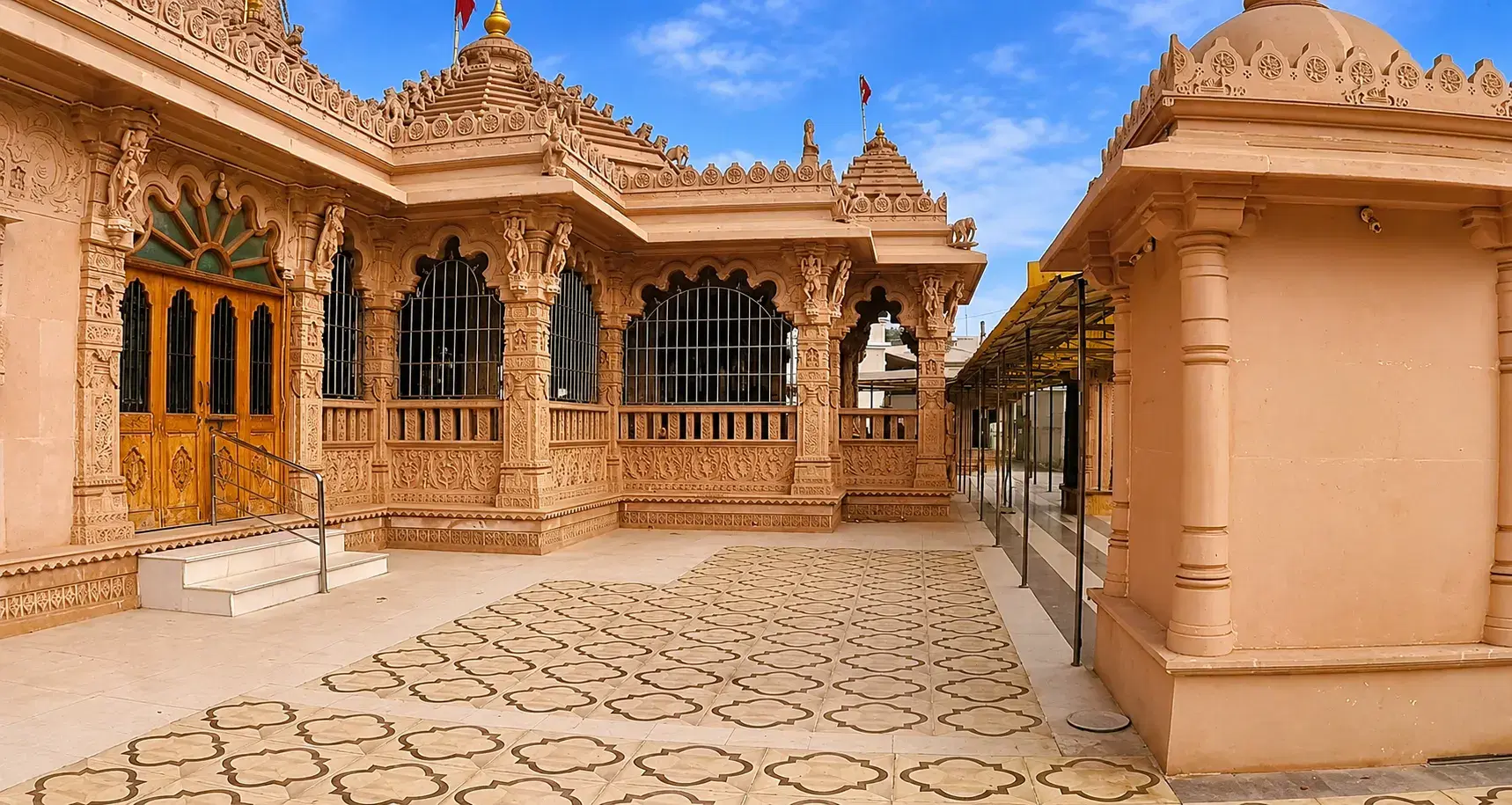
Temple access and traffic arrangements may change during festivals; follow local management instructions.
Lakhpat is a sparsely inhabited fortified town overlooking the Great Rann and Kori Creek. Its nearly intact seven-kilometer walls were erected in 1801, and the enclosure preserves a historic gurdwara, Sufi shrines and other remains from its former port era.
The photograph for this guide shows a carved mausoleum inside the town rather than the outer fort walls. Explore the religious sites and fortifications respectfully, and allow enough daylight for the return because Lakhpat is remote and should not be treated as a late-evening detour.
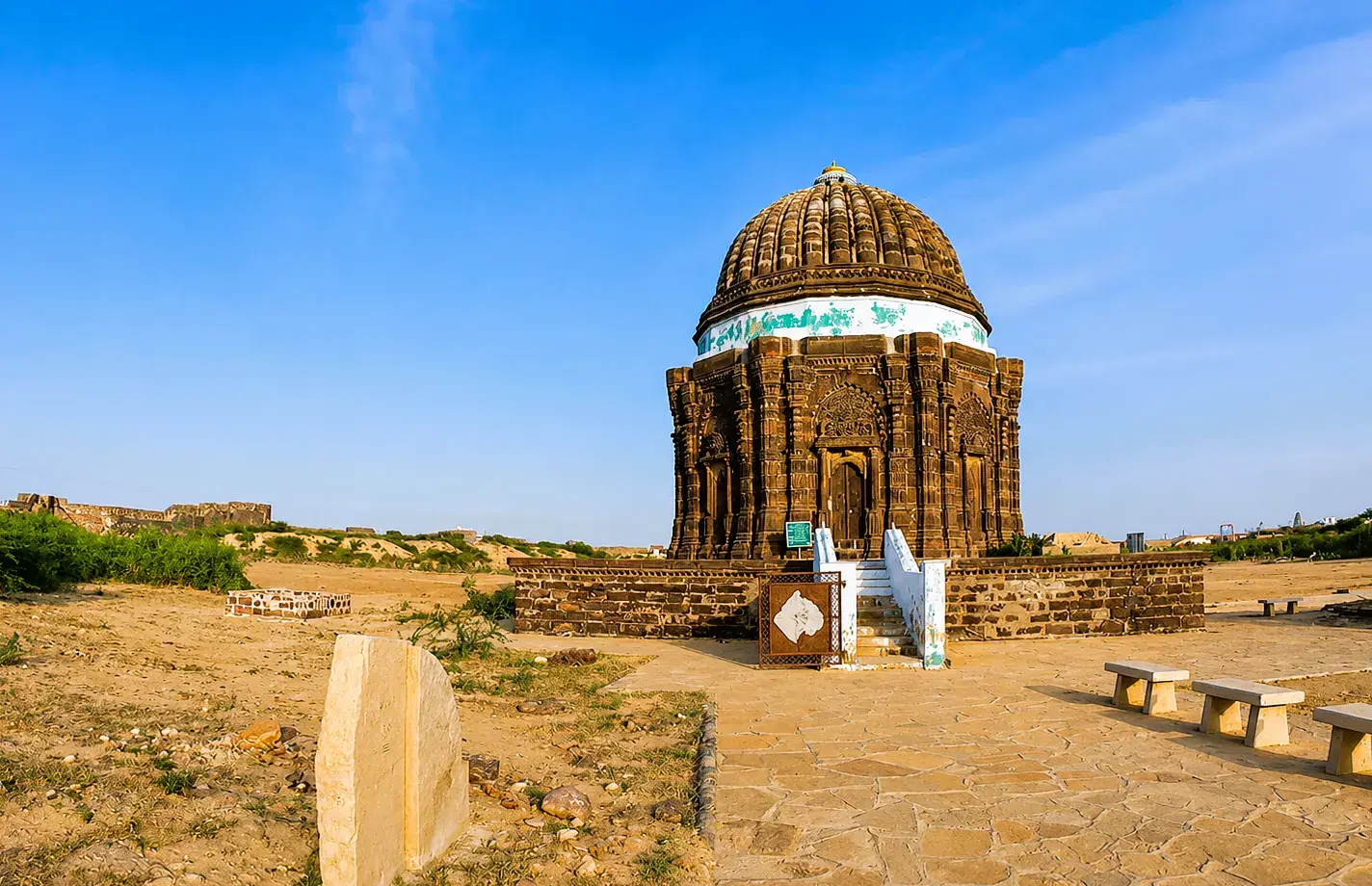
Facilities and mobile coverage can be limited. Carry water, basic supplies and offline route details.
Dholavira is a UNESCO World Heritage Site on Khadir Island, occupied during the Harappan period from about 3000 to 1500 BCE. Its fortified plan, reservoirs, drains, gateways and cemetery show how the settlement adapted to a water-scarce landscape.
The supplied image shows the Archaeological Museum entrance, not the excavated city itself. Visit the museum for context before or after walking the protected site, and consider an overnight stay because a return trip from Bhuj creates a long road day.
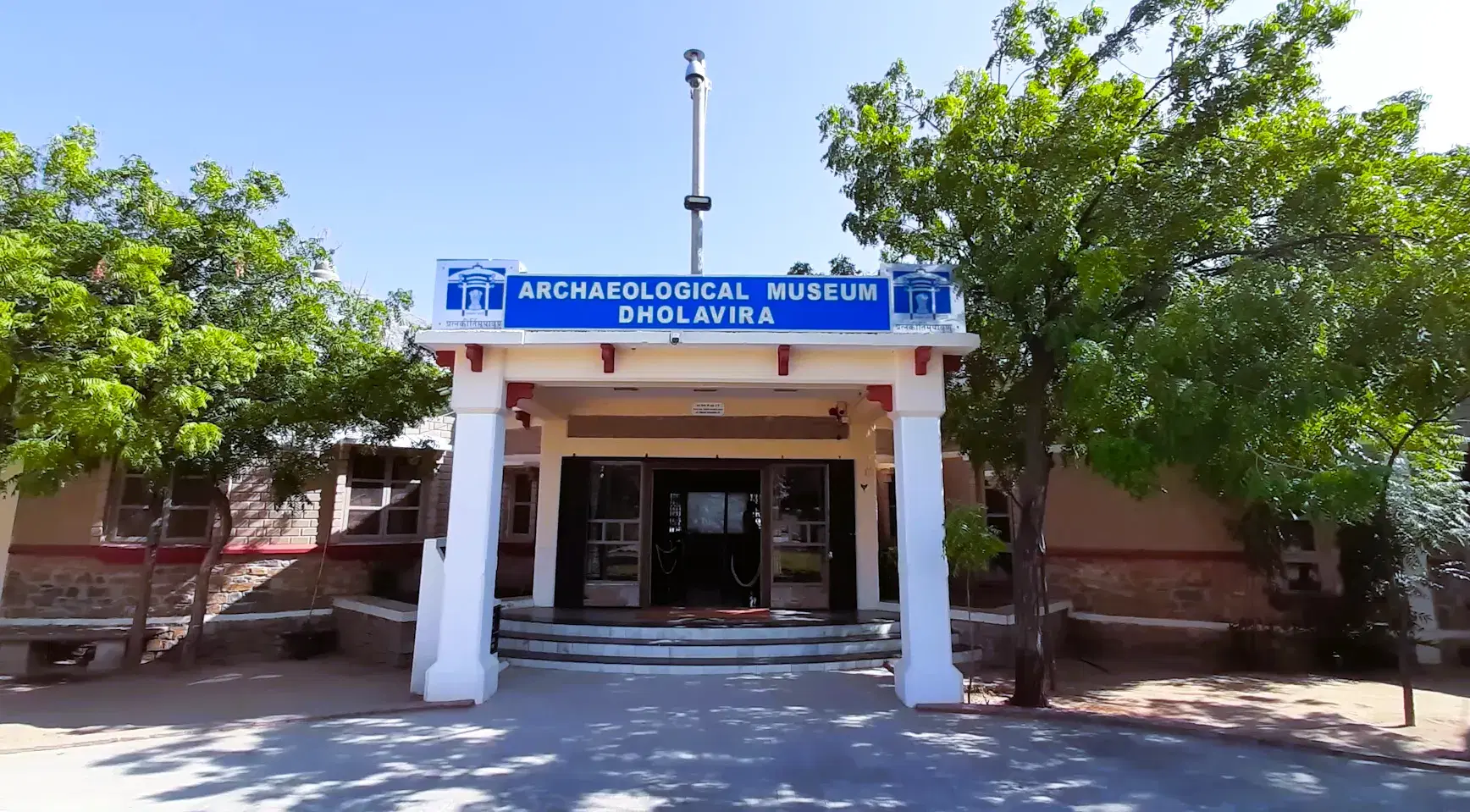
ASI hours and museum access can change. Confirm them before committing to the long drive from Bhuj.
The Magnetic Point is a signed roadside curiosity on the approach to Kalo Dungar. It is promoted as a place where the road appears to influence vehicle movement, but it should be treated as a brief optional stop rather than a major attraction or scientific demonstration.
Safety is more important than testing the claim. Park only where permitted, keep clear of moving traffic and never place a vehicle in neutral to experiment on a public road.
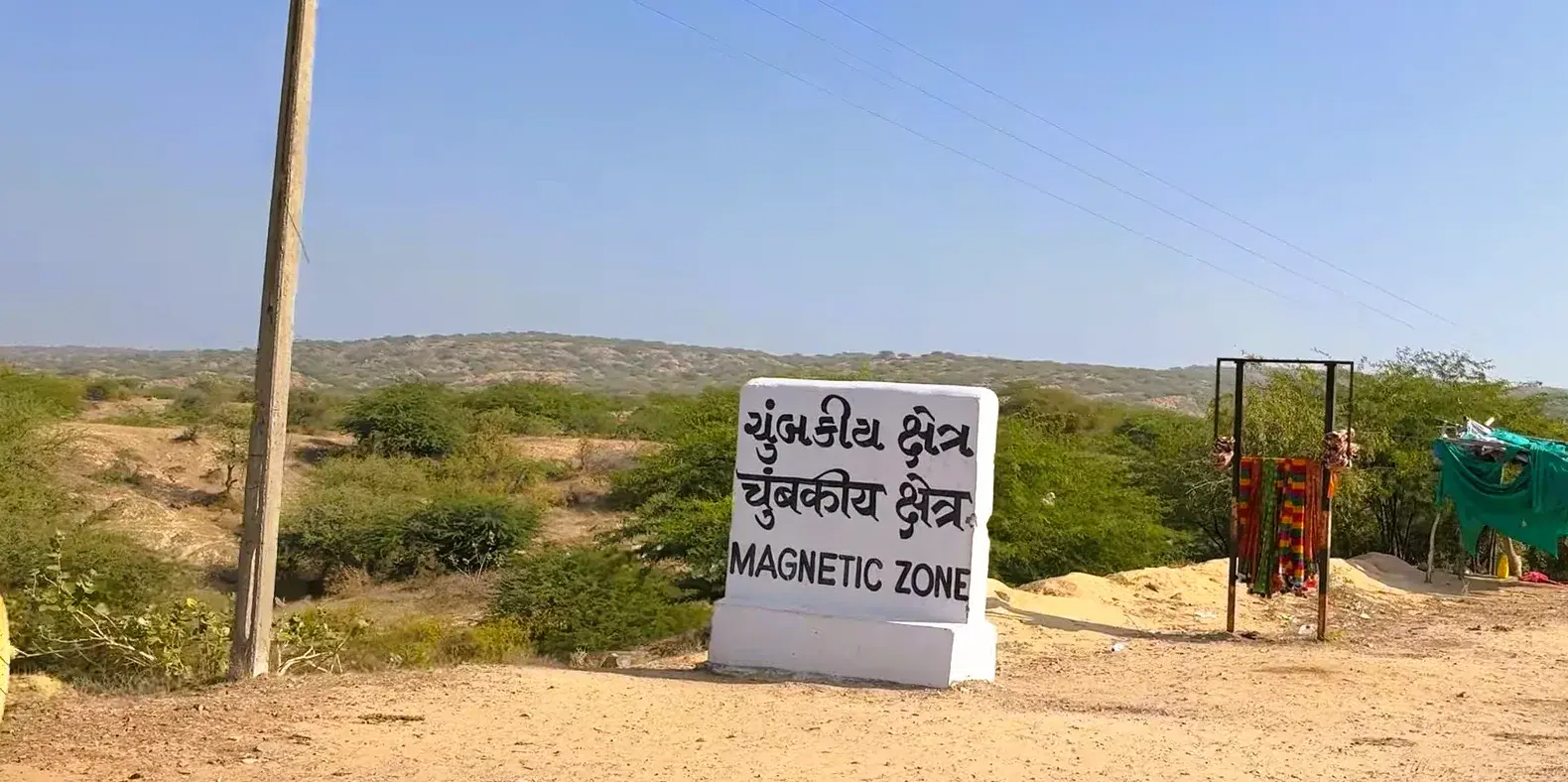
This is a roadside stop with limited facilities, not a managed visitor attraction.
Founded in 1877, the Kachchh Museum is Gujarat’s oldest museum. Its collections include first-century Kshatrapa inscriptions, examples of the Kachchhi script, local coins, embroidery, paintings, arms, musical instruments, sculpture and metalwork.
Visit early in the Bhuj itinerary because the galleries provide useful context for the district’s living craft traditions and historic sites. The building stands near Hamirsar Lake, making it easy to combine with the palace compound and Chhatardi.
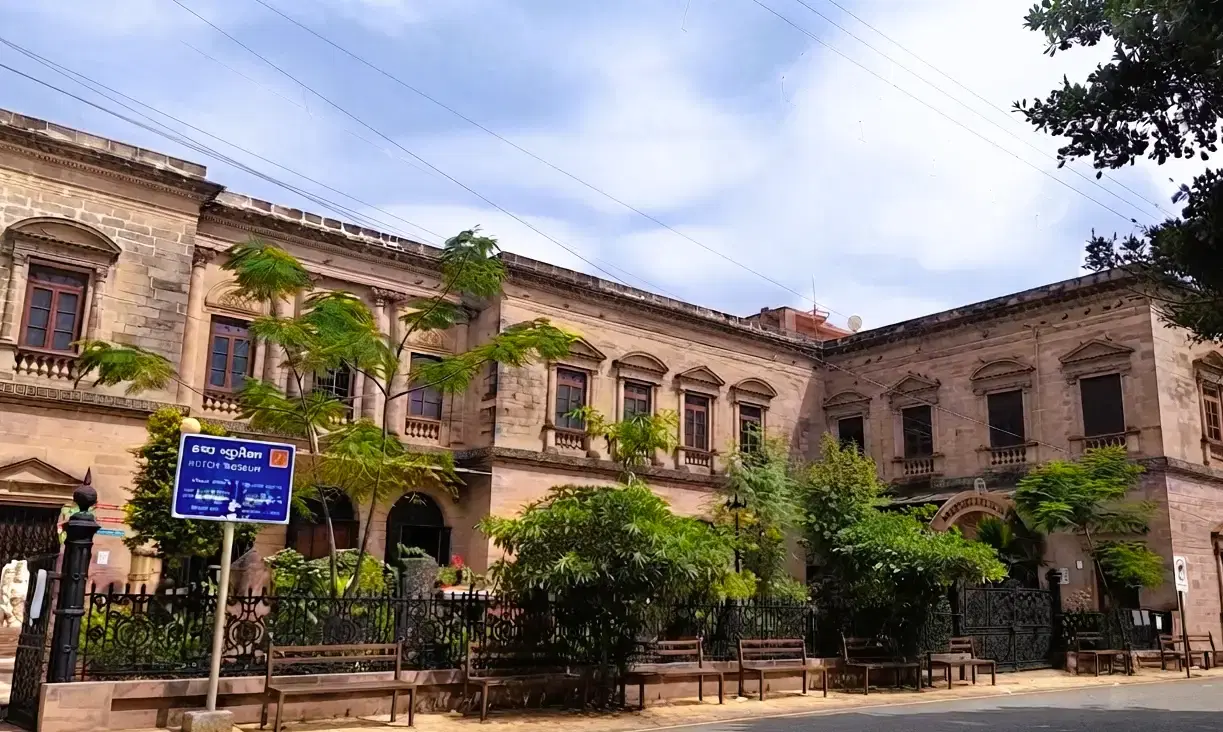
Opening hours, tickets and gallery access can change; verify them locally before visiting.
Narayan Sarovar is traditionally counted among Hinduism’s five sacred lakes. Seven stone temples stand within a paved, walled courtyard approached from the lake, making this a significant pilgrimage complex in far-western Kutch.
Combine Narayan Sarovar with nearby Koteshwar and, with an early start, Lakhpat or Mata No Madh. The route is remote, so temple time should be balanced with daylight, road conditions and a realistic return plan.
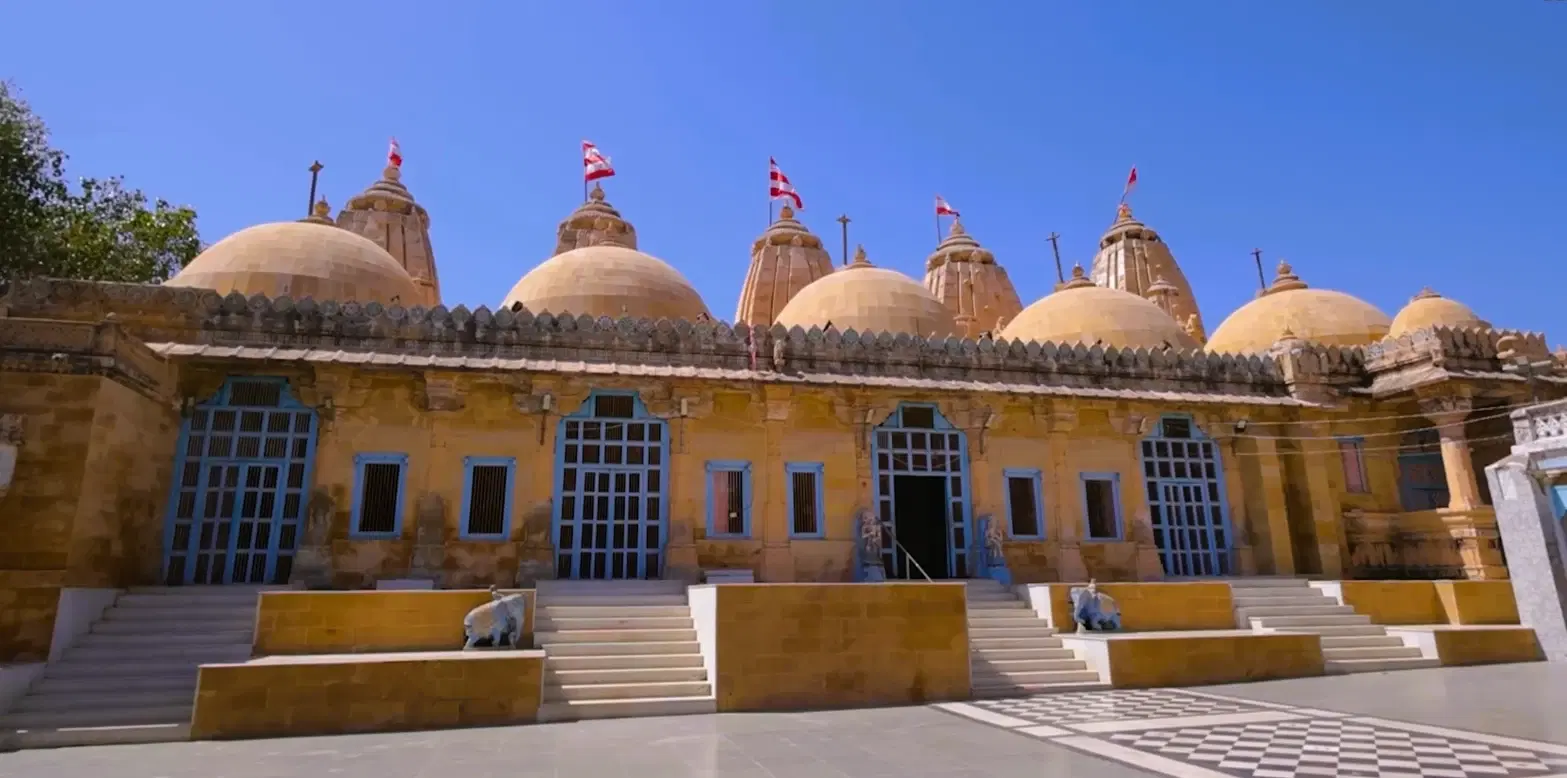
Roadside services can be sparse; carry water and refuel before the remote section.
Vijay Vilas Palace was constructed from 1920 to 1929 as a summer residence for Kutch’s rulers. The sandstone building combines domes, jali work, colored glass, carved details and broad views from its elevated sections.
The palace lies west of Mandvi and pairs naturally with the town and beach. Access to rooms, terraces or the associated private beach can change, so confirm the current ticket and visitor route rather than relying on older itineraries.
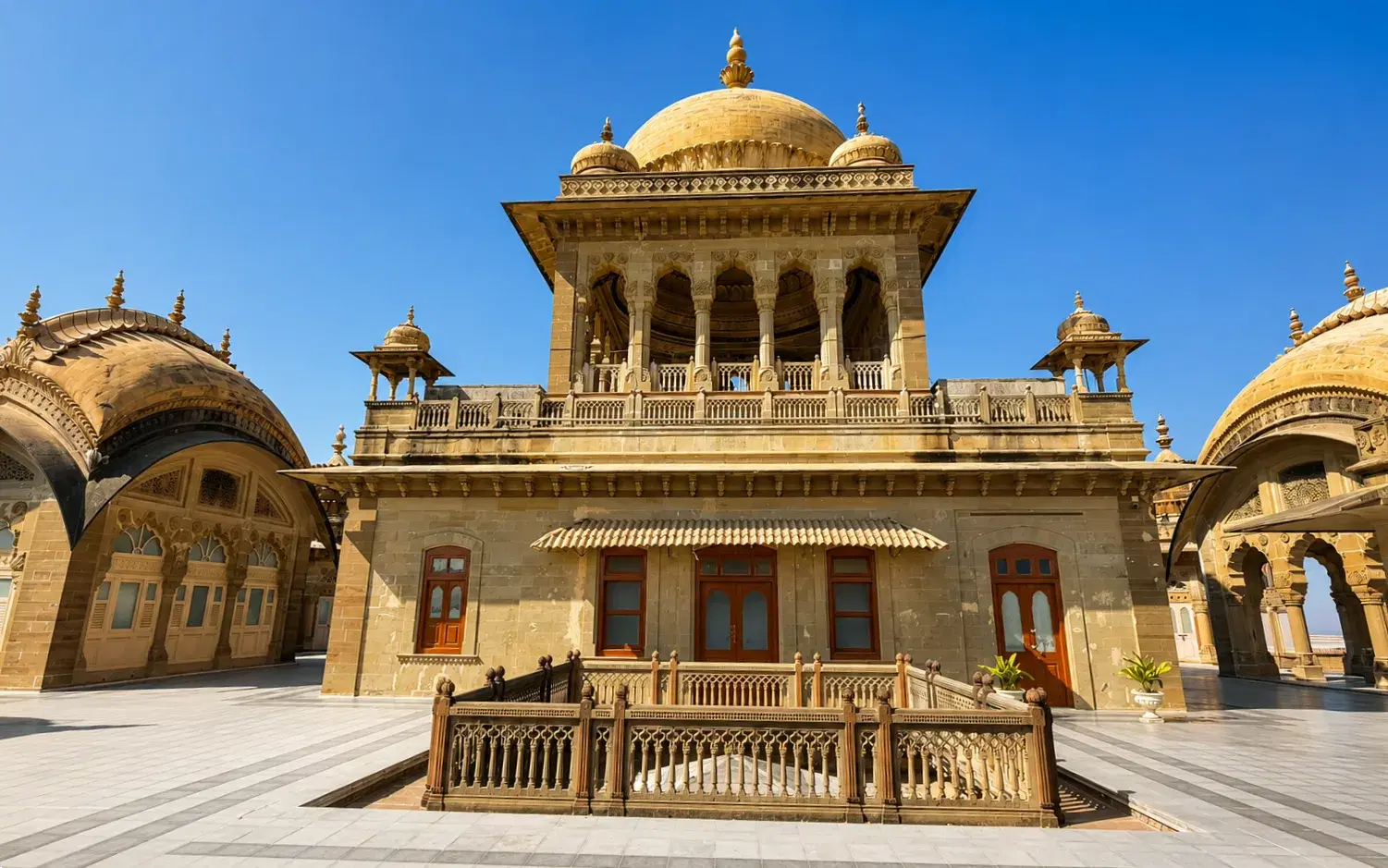
Opening hours and accessible sections can change; confirm them before driving from Bhuj.
Koteshwar Mahadev Temple is a coastal Shiva pilgrimage site near Narayan Sarovar in far-western Kutch. Its position beside the Arabian Sea creates a distinctive combination of worship, open horizon and coastal sunset views.
The temple is best planned as part of the Narayan Sarovar route rather than a standalone drive from Bhuj. Observe temple etiquette, remain within public areas and follow any security restrictions that apply in this sensitive western region.
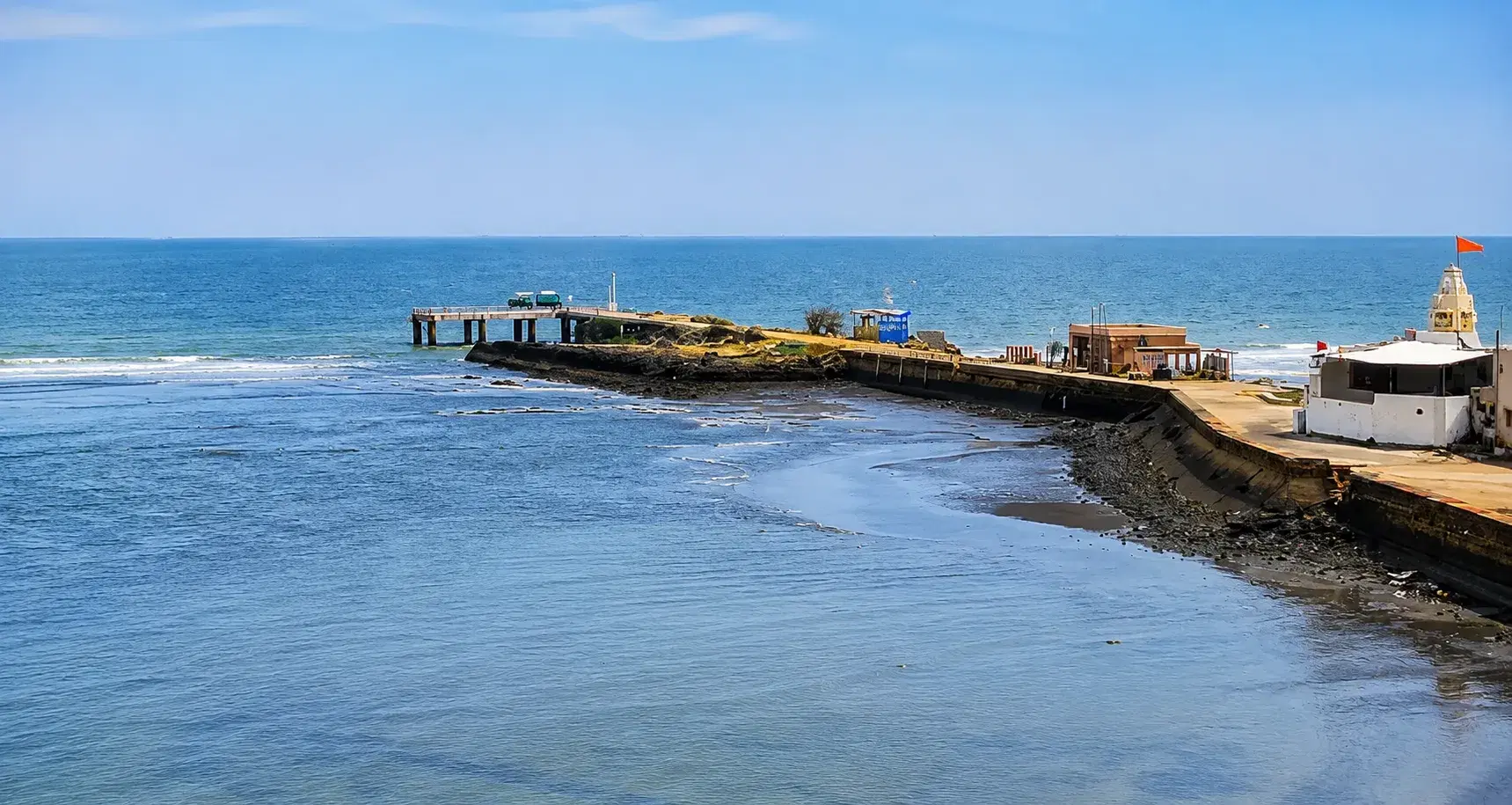
Temple and border-area access rules can change; follow local and security instructions.
Craft village near Bhuj
Visit identified weavers and cooperative shops for handwoven textiles. Ask before entering workspaces or photographing artisans.
Block-printing center
Learn how Ajrakh textiles are printed and dyed, then buy directly from established makers when possible.
Rogan art and village crafts
Look for Rogan painting, lacquer work and copper bells while respecting homes and active workshops.
Seasonal wetland northwest of Bhuj
A birdwatching option when water and access conditions are suitable; go with a knowledgeable local guide.
Mekan Dada pilgrimage site
A regional spiritual stop associated with Mekan Dada and desert service traditions; confirm current access before traveling.
A spiced potato filling in a bun, usually served with chutneys, peanuts and sev.
Millet flatbread commonly paired with seasonal vegetables, curd, chutney or other regional accompaniments.
A practical way to sample several vegetable, lentil, bread, rice and sweet preparations in one meal.
Ask a busy, hygienic restaurant or sweet shop for current specialties and ingredient information.
Day 1
Day 2
Day 3
Day 4
Day 5 or overnight
The best Kutch itinerary respects the district’s scale: begin with Bhuj, keep the White Rann and Kalo Dungar together, give Mandvi its own coastal day, and choose separate time for Dholavira or the far-western pilgrimage route.
Once the route is fixed, compare places to stay and arrange transport for the longer drives. Confirm permits, attraction hours, weather and border-area rules close to departure.
Check these official resources for destination information and current notices. Confirm opening times, entry charges and access requirements before travelling.
Found something outdated? Send Traviya a correction.